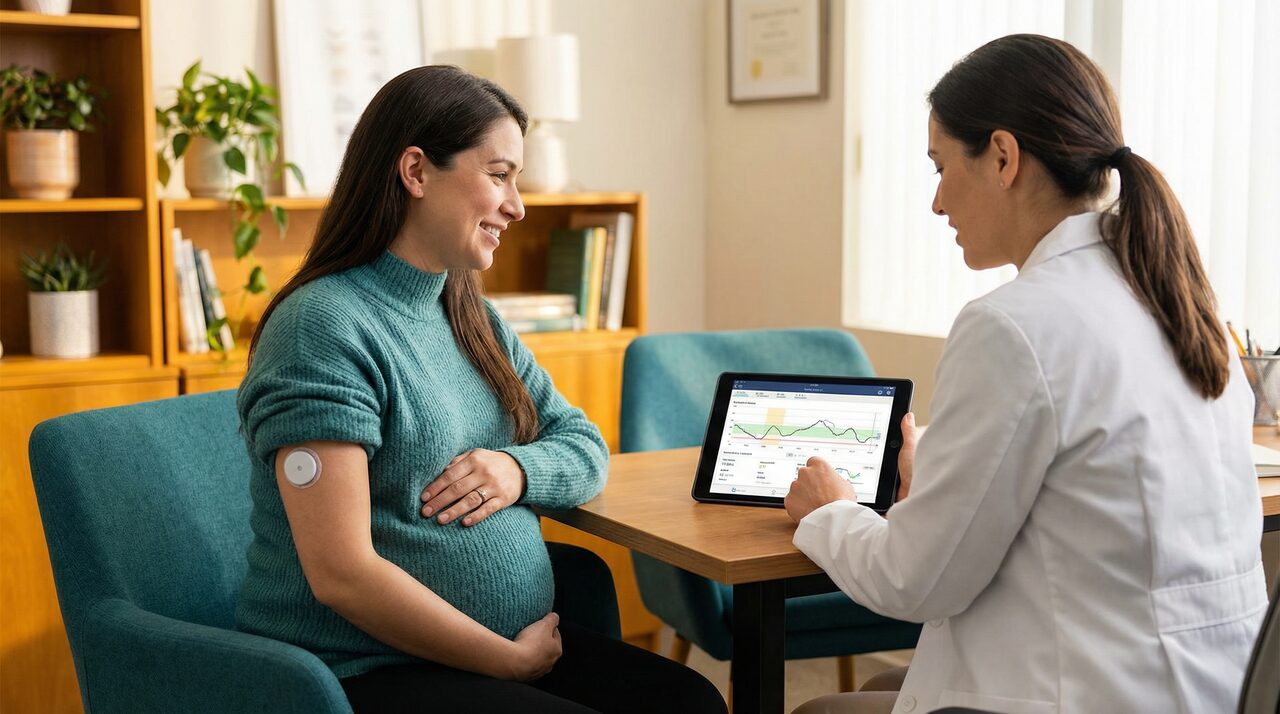
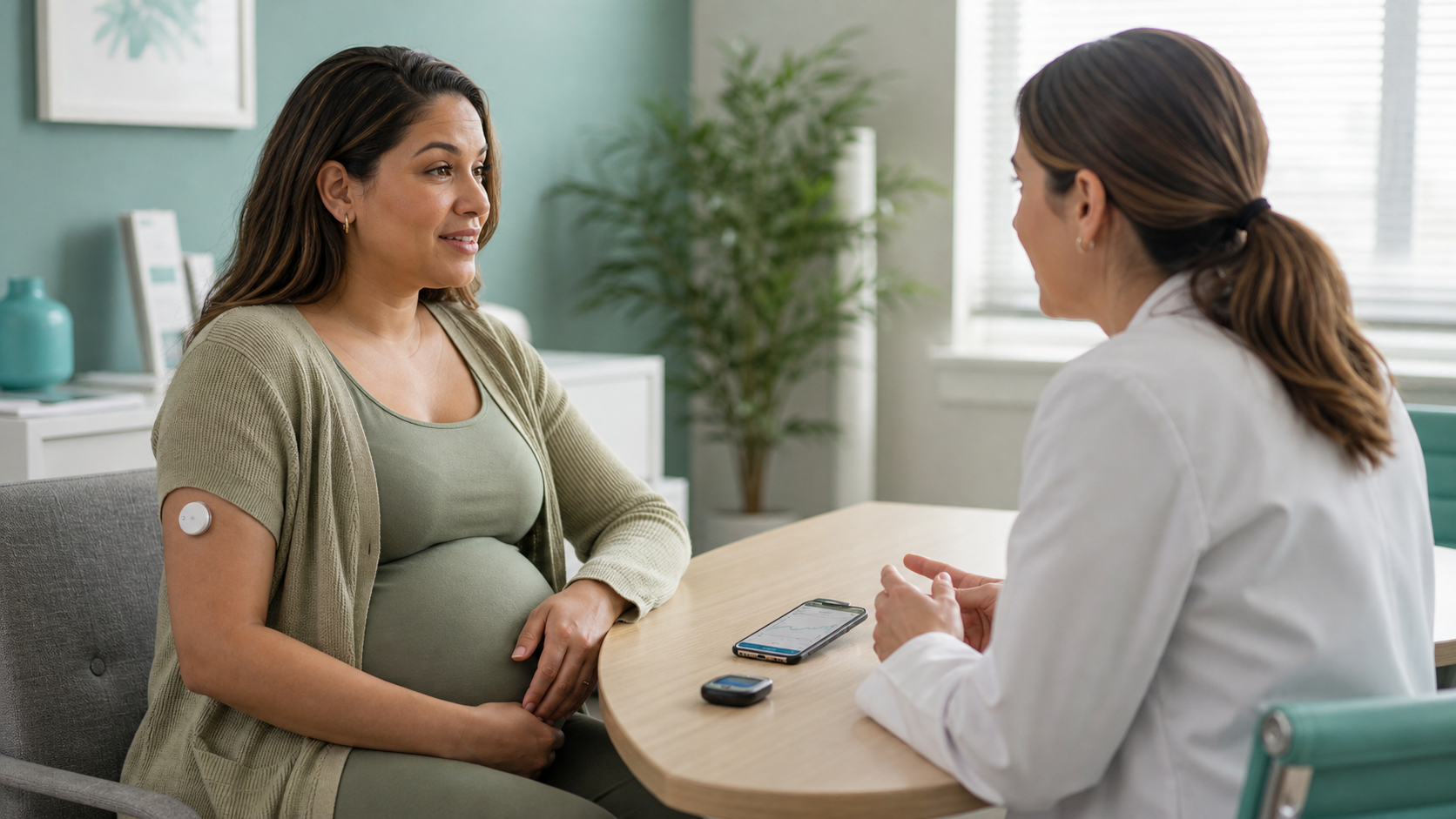
Short summary: A randomized trial in 205 women with gestational diabetes found that adding flash glucose monitoring to the usual finger-stick checks did not improve the trial’s main measure of glucose control. A secondary finding suggested fewer large-for-gestational-age babies, but the researchers said that result needs cautious interpretation.
What the trial asked
Self-monitoring of blood glucose remains a standard way to follow glucose during gestational diabetes. Continuous and flash glucose monitors can provide more readings, but their role in gestational diabetes is still being studied.
This open-label, single-center randomized controlled trial compared two approaches:
- Flash glucose monitoring added to self-monitoring of blood glucose.
- Self-monitoring of blood glucose alone.
The main outcome was the percentage of finger-stick glucose measurements within the established target range. The study also looked at maternal and newborn outcomes.
Who took part
The trial included 205 women with gestational diabetes. There were 102 women in the group using flash monitoring plus finger-stick checks and 103 in the finger-stick group. The median age was 32 years, the median pre-pregnancy BMI was 23.5 kg/m2, and the median gestational age at enrolment was 27 weeks.
The researchers described this as a low-risk gestational diabetes population. Results may not apply in the same way to every pregnancy, particularly pregnancies with different medical risks or treatment needs.
What happened to glucose control?
Adding flash monitoring did not improve the primary glucose outcome. The percentage of self-monitored glucose readings within the target range was actually lower in the flash-monitoring group than in the finger-stick-only group: 89.5% versus 92.6%.
Median fasting and one-hour post-meal glucose concentrations were similar between the groups and were within the recommended targets. The overall conclusion was that adjunctive flash monitoring did not improve glycaemic control in this trial.
What about the babies?
Large-for-gestational-age babies were reported less often in the flash-monitoring group: 3% compared with 11% in the finger-stick-only group. The reported odds ratio was 0.27, with a 95% confidence interval from 0.07 to 0.99.
This was a secondary outcome, not the main question the trial was designed to answer. The difference was based on a small number of events, so it should not be treated as proof that flash monitoring prevents large-for-gestational-age birth. Larger studies would be needed to clarify whether this finding is real and whether it applies to broader groups of pregnant people with gestational diabetes.
What the study does and does not show
The study does not show that flash glucose monitoring is useless. It shows that, in this particular low-risk group, adding flash monitoring to finger-stick checks did not improve the main measure of glucose control over the study period.
It also does not show that a flash monitor can replace the glucose checks or care plan recommended by a maternity or diabetes team. Monitoring systems, treatment targets and access to devices differ between countries and between pregnancies.
Questions to ask your healthcare team
- Which glucose monitoring method is recommended for my pregnancy?
- Should a sensor be used alongside, rather than instead of, finger-stick checks?
- What should I do if sensor readings and symptoms do not match?
- Which readings or symptoms should prompt a call to my maternity or diabetes team?
- How will glucose results affect my overall pregnancy care?
The bottom line
In this randomized trial, adding flash glucose monitoring to self-monitoring did not improve glycaemic control in a low-risk gestational diabetes population. A lower rate of large-for-gestational-age babies was reported as a secondary finding, but it is not definitive. If you have gestational diabetes, use the monitoring method and targets agreed with your healthcare team and do not change treatment based on this study alone.
Sources and review
Last reviewed: 7 August 2026 by the Livingdiabetes Editorial Team. This article is educational and does not replace personalised advice from your maternity or diabetes healthcare team.