Short summary: A population-based longitudinal quasi-experimental cohort study of 15,413 adults with insulin-treated type 2 diabetes found that introducing publicly funded intermittently scanned continuous glucose monitoring, often called flash glucose monitoring, was associated with fewer acute diabetes-related hospitalizations, shorter hospital stays, a modest fall in HbA1c, and lower inpatient costs. The study was not a randomized trial, so it cannot prove that the glucose monitor alone caused every improvement.
What did the study examine?
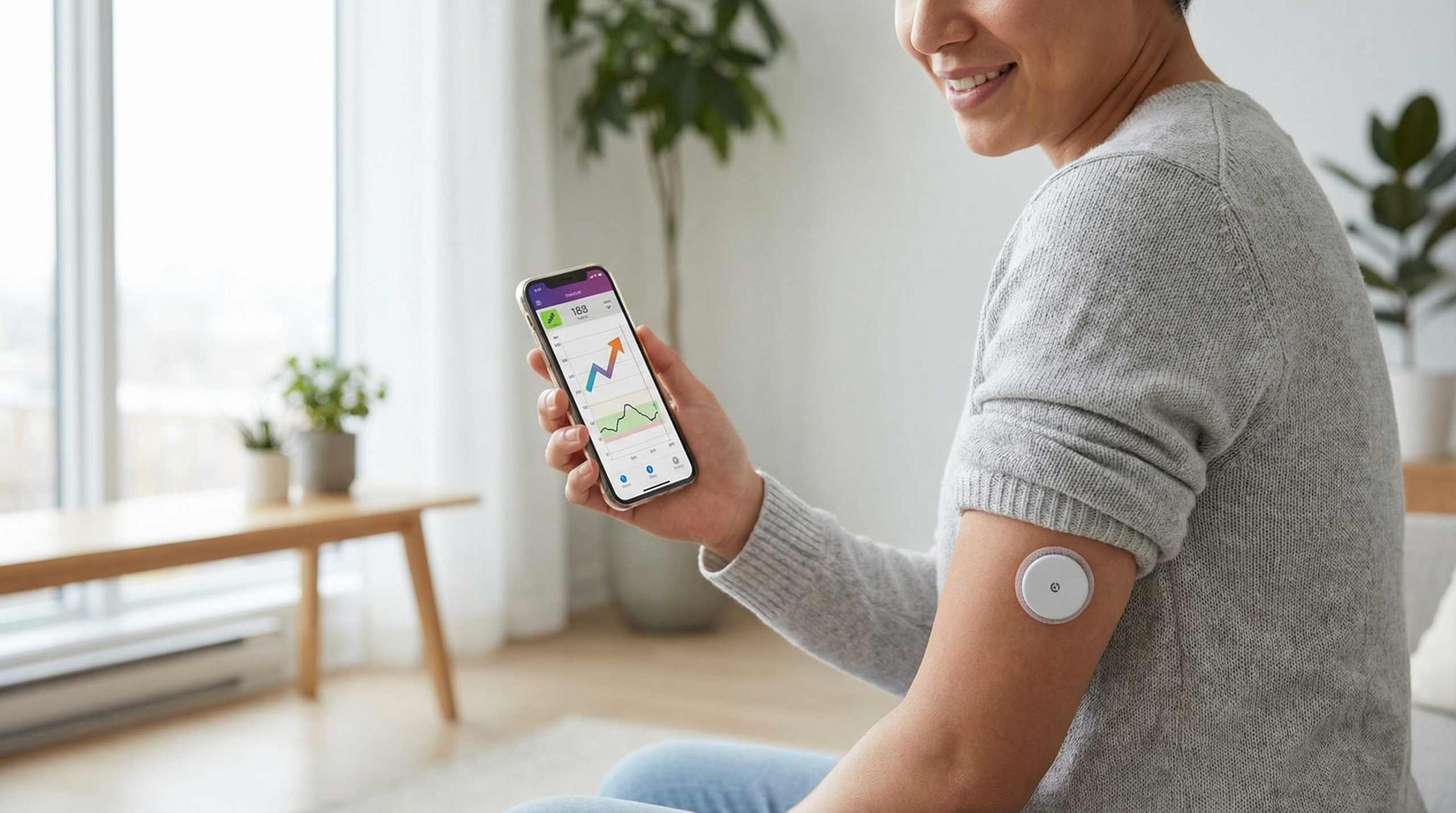
Intermittently scanned continuous glucose monitoring, or isCGM, measures glucose through a sensor worn on the skin. A person scans the sensor with a reader or compatible phone to see current glucose and recent trends. It can provide more information between finger-stick checks, especially for people who use multiple daily insulin injections.
The researchers studied adults with type 2 diabetes who were using multiple daily insulin injections and started publicly funded isCGM in Spain between April 2022 and December 2023. The study included 15,413 people and compared healthcare use before and after monitoring began.
What did researchers find?
Average HbA1c fell from 8.09% before isCGM initiation to 7.65% afterward. This is an average change across the study population; it does not predict the result for every person.
Acute diabetes-related hospitalizations, including admissions linked to diabetic ketoacidosis, hyperglycemic crises, severe hypoglycemia, or simple hyperglycemia, became less frequent after isCGM implementation. The rate fell from 74.6 to 27.5 events per 10,000 person-years, a rate ratio of 0.37 with a 95% confidence interval from 0.28 to 0.49.
The median hospital stay also fell from four days to three days. The study reported a total inpatient cost reduction of $3,806,776.90, equivalent to -$955,186.70 per 10,000 person-years in the study’s analysis.
What happened to cardiovascular hospitalizations?
The simple before-and-after comparison did not show a statistically significant difference in cardiovascular hospitalization rates. The rate was 228.8 versus 215.8 per 10,000 person-years, with a rate ratio of 0.94 and a 95% confidence interval from 0.84 to 1.06.
An interrupted time-series analysis suggested that cardiovascular admission rates changed relative to the trend before isCGM implementation. That is a different question from simply comparing the two periods, and it should be interpreted carefully. The study does not establish that isCGM prevents heart attacks, strokes, or amputations.
Why the study design matters
This was a large real-world, quasi-experimental cohort study rather than a randomized controlled trial. Everyone in the study received isCGM, and the researchers compared outcomes before and after the program began. Other changes may have happened during the same period, including changes in clinical practice, access to care, insulin treatment, hospital coding, or the health of the people receiving monitoring.
For that reason, the results show an association between isCGM implementation and the observed changes. They do not prove that the monitor alone caused the lower hospitalization rate or lower costs. A publicly funded program may also include education, follow-up, and support that are not captured by the device itself.
What might this mean for people with type 2 diabetes?
The findings add to evidence that glucose monitoring can be useful for some people with type 2 diabetes who use multiple daily insulin injections. Seeing glucose patterns may help a person and their care team identify highs, lows, and changes around meals, activity, illness, and insulin doses.
Whether isCGM is appropriate depends on insulin treatment, risk of hypoglycemia, access and funding, ability to use the device, sensor accuracy, personal preferences, and local clinical guidance. The study does not show that every person with type 2 diabetes needs a sensor or that a monitor can replace prescribed treatment and clinical follow-up.
A sensor reading should be interpreted in context. If a reading does not match symptoms, or if the device is giving an unexpected result, follow the instructions for the specific device and contact the diabetes team for advice about whether another glucose check is needed.
Questions to ask your diabetes care team
- Would flash glucose monitoring be useful with my current insulin regimen?
- How would I use the readings to make treatment decisions safely?
- What should I do when the sensor reading does not match how I feel?
- How often should I scan, replace the sensor, or check glucose another way?
- What education, funding, and follow-up support are available where I live?
Do not change insulin doses or stop prescribed treatment because of a news article. Discuss monitoring and insulin decisions with the clinician who knows your medical history, glucose patterns, treatment plan, and access needs.
Bottom line
In a large real-world study of adults using multiple daily insulin injections for type 2 diabetes, publicly funded flash glucose monitoring was associated with fewer acute diabetes-related hospitalizations, shorter stays, a lower average HbA1c, and lower inpatient costs. The quasi-experimental design means the findings cannot prove that isCGM alone caused those changes, but they support further attention to access, education, and safe use of glucose monitoring.
Source and evidence summary
- Primary study: Rodríguez de Vera Gómez and colleagues, Diabetes Care 2026;49(8):1442-1450. PubMed PMID 42301188.
- Journal DOI: 10.2337/dc26-0547.
- Study design: Population-based longitudinal quasi-experimental cohort study.