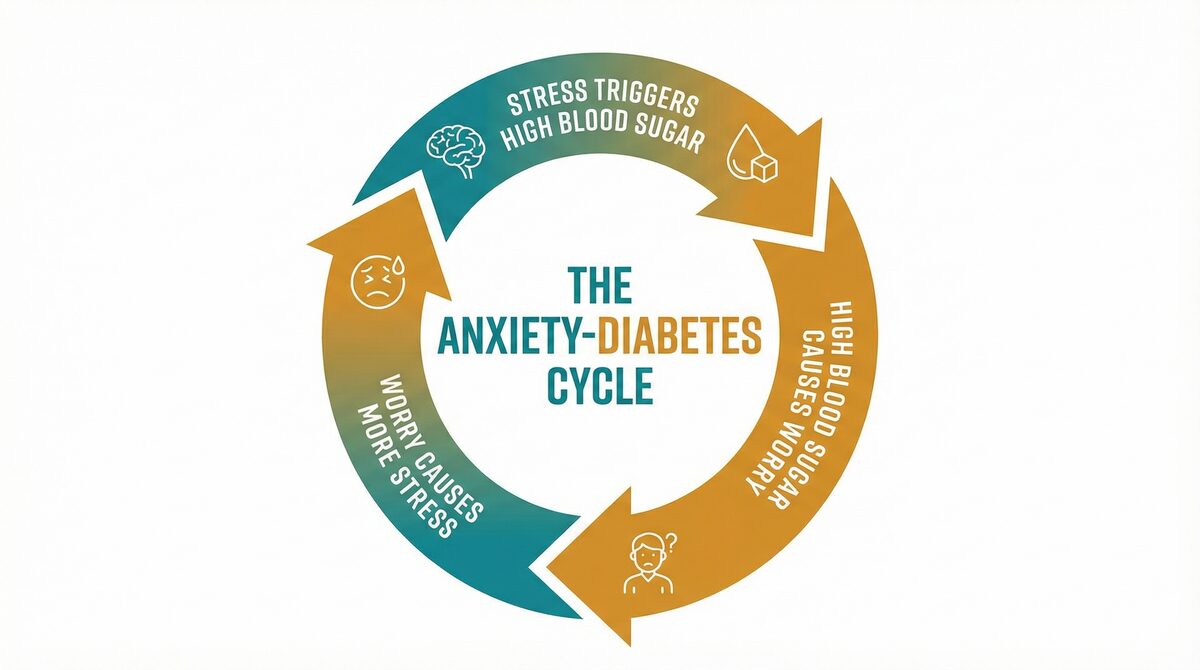
Anxiety can make diabetes feel louder. Worry about low blood sugar, complications, food choices, injections, devices, appointments, or judgment can become a cycle that affects sleep, decisions, and daily routines.
Quick summary
Anxiety symptoms can also overlap with glucose symptoms. Shaking, sweating, fast heartbeat, nausea, or dizziness may come from anxiety, low blood sugar, high blood sugar, caffeine, illness, or another cause.
Key takeaways
- Anxiety can increase avoidance and make diabetes tasks feel harder.
- Some anxiety symptoms can look like glucose symptoms.
- Checking patterns is safer than guessing.
- Counseling, diabetes education, and medical review can all help.
What to track
- Glucose when symptoms happen.
- Food, caffeine, alcohol, sleep, and activity.
- What the worry is about.
- Whether avoidance is growing.
- Whether symptoms improve after treating confirmed low blood sugar, or after rest, breathing, or support if glucose is normal.
What can help
A plan may include glucose safety steps, fear-of-hypoglycemia support, therapy, gradual exposure to avoided tasks, medication review, sleep support, and diabetes education. The right approach depends on the person and the severity.
Anxiety is not a character flaw. It is a treatable pattern that can become more manageable with the right support.
Practical takeaway
When anxiety and glucose symptoms overlap, check safely and look for patterns. You do not have to solve the cycle alone.
Safety note
This article is not a substitute for medical care. Seek urgent care for severe low blood sugar, chest pain, fainting, suicidal thoughts, panic that feels unsafe, or symptoms that do not fit your usual pattern.
What to ask your care team
- Could stress, sleep, anxiety, depression, medicines, illness, or glucose patterns be affecting how I feel?
- Which symptoms should prompt urgent medical or mental health support?
- Would diabetes education, counseling, peer support, medication review, or a safety plan help?
Related reading
Source summary
- Anxiety Disorders, National Institute of Mental Health. Patient guidance. Accessed June 5, 2026. Source
- Anxiety, MedlinePlus, National Library of Medicine. Patient guidance. Accessed June 5, 2026. Source
- Diabetes and Mental Health, Centers for Disease Control and Prevention. Patient guidance. Accessed June 5, 2026. Source
- Diabetes Testing, Centers for Disease Control and Prevention. Patient guidance. Accessed June 5, 2026. Source