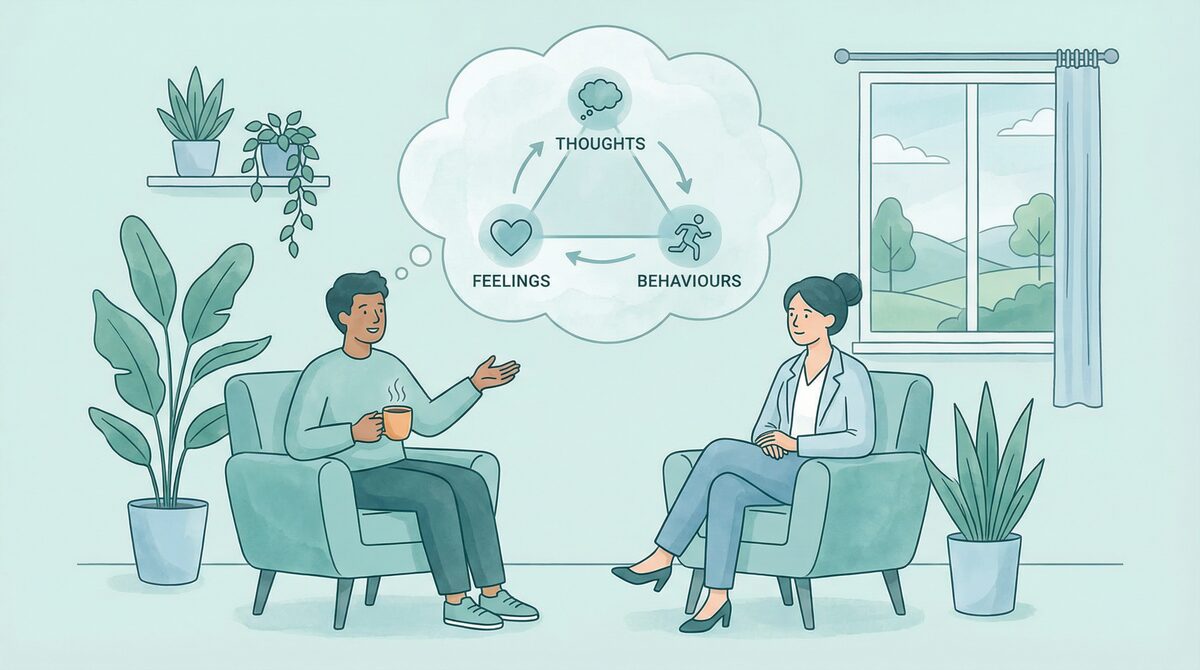
Cognitive behavioral therapy, often called CBT, is a structured type of psychotherapy that looks at the links between thoughts, feelings, behaviors, and physical symptoms. For diabetes, CBT may help with distress, anxiety, depression, avoidance, food stress, or fear of hypoglycemia.
Quick summary
CBT does not replace medical diabetes care. It can help people respond differently to the thoughts and habits that make care feel impossible.
Key takeaways
- CBT is a psychotherapy approach, not a diabetes cure.
- It may help with coping, anxiety, depression, burnout, or avoidance.
- Skills can include problem-solving, thought testing, planning, and gradual exposure.
- Severe depression, trauma, or self-harm risk needs prompt professional support.
What CBT might work on
- Fear of low blood sugar.
- Avoiding glucose checks or appointments.
- All-or-nothing thinking after high readings.
- Food guilt and shame.
- Planning small actions when diabetes feels overwhelming.
What to expect
CBT is usually practical and skill-based. A therapist may help identify patterns, test unhelpful thoughts, and plan manageable behavior changes. The work should be collaborative, not blaming.
Some people need CBT alone, while others need medication, trauma-informed therapy, peer support, or diabetes education. There is no one correct path.
Practical takeaway
CBT can help reduce the mental load around diabetes decisions. It works best when the therapist respects the medical reality of diabetes.
Safety note
This article is not a substitute for medical care. Seek urgent help for suicidal thoughts, self-harm risk, feeling unable to stay safe, severe depression, or medical symptoms needing immediate care.
What to ask your care team
- Could stress, sleep, anxiety, depression, medicines, illness, or glucose patterns be affecting how I feel?
- Which symptoms should prompt urgent medical or mental health support?
- Would diabetes education, counseling, peer support, medication review, or a safety plan help?
Related reading
Source summary
- Psychotherapies, National Institute of Mental Health. Patient guidance. Accessed June 5, 2026. Source
- Diabetes and Mental Health, Centers for Disease Control and Prevention. Patient guidance. Accessed June 5, 2026. Source
- Depression, National Institute of Mental Health. Patient guidance. Accessed June 5, 2026. Source
- Anxiety Disorders, National Institute of Mental Health. Patient guidance. Accessed June 5, 2026. Source