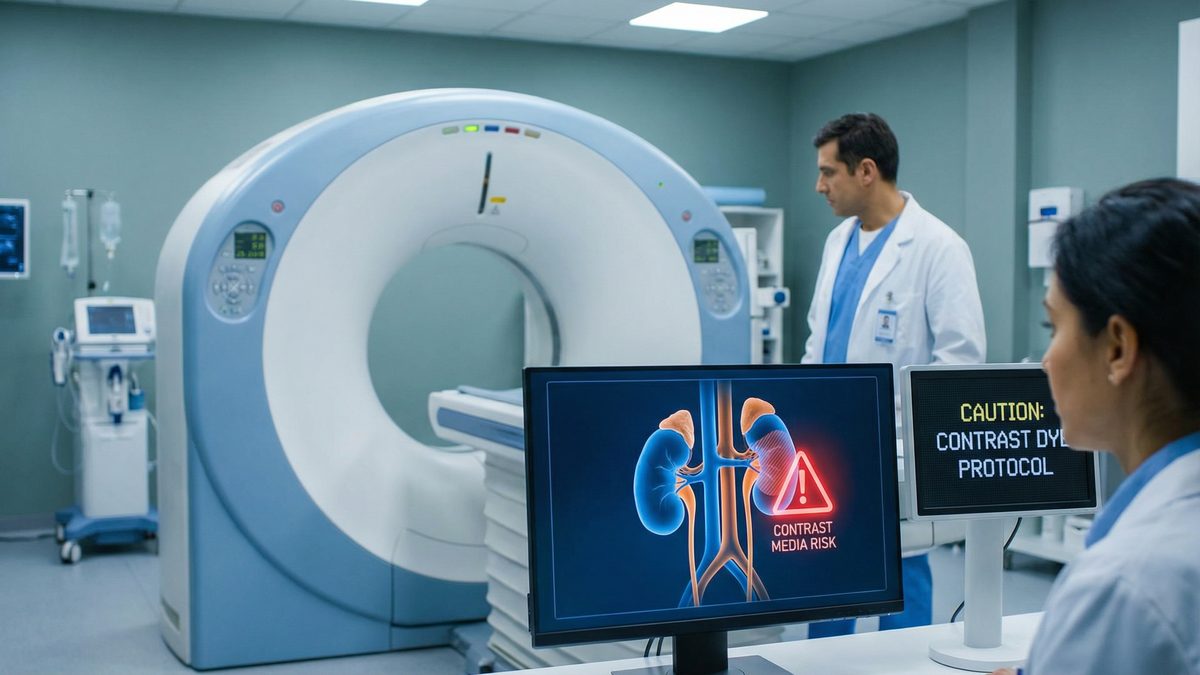
Contrast dye is used in some CT scans, angiograms, and other imaging tests to make blood vessels or organs easier to see. Many people with diabetes can receive contrast safely, but kidney risk needs attention when kidney function is reduced or the person is acutely ill.
Quick summary
The key is not to refuse every contrast study. The key is to know your eGFR, why the test is needed, and what precautions are appropriate.
Key takeaways
- eGFR is the main kidney number used before many contrast decisions.
- Risk is higher with advanced kidney disease, dehydration, acute illness, or repeated contrast exposure.
- Some medicines may need review around imaging.
- The benefit of the imaging test may outweigh kidney risk when the test is important.
Questions before contrast
- What is my latest eGFR?
- Is this iodinated contrast, gadolinium, or another type?
- Is contrast necessary for the question we are trying to answer?
- Do I need hydration or medicine instructions before or after the test?
- Should kidney function be rechecked after the test?
Medicine and hydration review
Clinicians may review diuretics, NSAIDs, metformin, blood pressure medicines, and other drugs depending on kidney function and the type of contrast. Instructions vary, so do not stop medicines unless the care team tells you to.
Hydration advice also varies. People with heart failure or advanced kidney disease should not simply drink large amounts without guidance.
Practical takeaway
Before an imaging test with contrast, ask for your eGFR and the reason contrast is needed. A clear plan is better than fear or guessing.
Safety note
This article is not a substitute for medical care. Seek urgent care for severe allergic reaction, trouble breathing, chest pain, fainting, low urine output, severe vomiting, or symptoms that feel unsafe after imaging.
What to ask your care team
- What do my latest kidney numbers mean for my diabetes plan?
- Which symptoms, medicine changes, or test results should prompt urgent care?
- Do my blood pressure, glucose, nutrition, or medicine goals need adjustment?
Source summary
- Contrast Dye and the Kidneys, National Kidney Foundation. Patient guidance. Accessed June 5, 2026. Source
- Diabetic Kidney Disease, National Institute of Diabetes and Digestive and Kidney Diseases. Patient guidance. Accessed June 5, 2026. Source
- Estimated Glomerular Filtration Rate, National Kidney Foundation. Patient guidance. Accessed June 5, 2026. Source
- Chronic Kidney Disease, MedlinePlus, National Library of Medicine. Patient guidance. Accessed June 5, 2026. Source