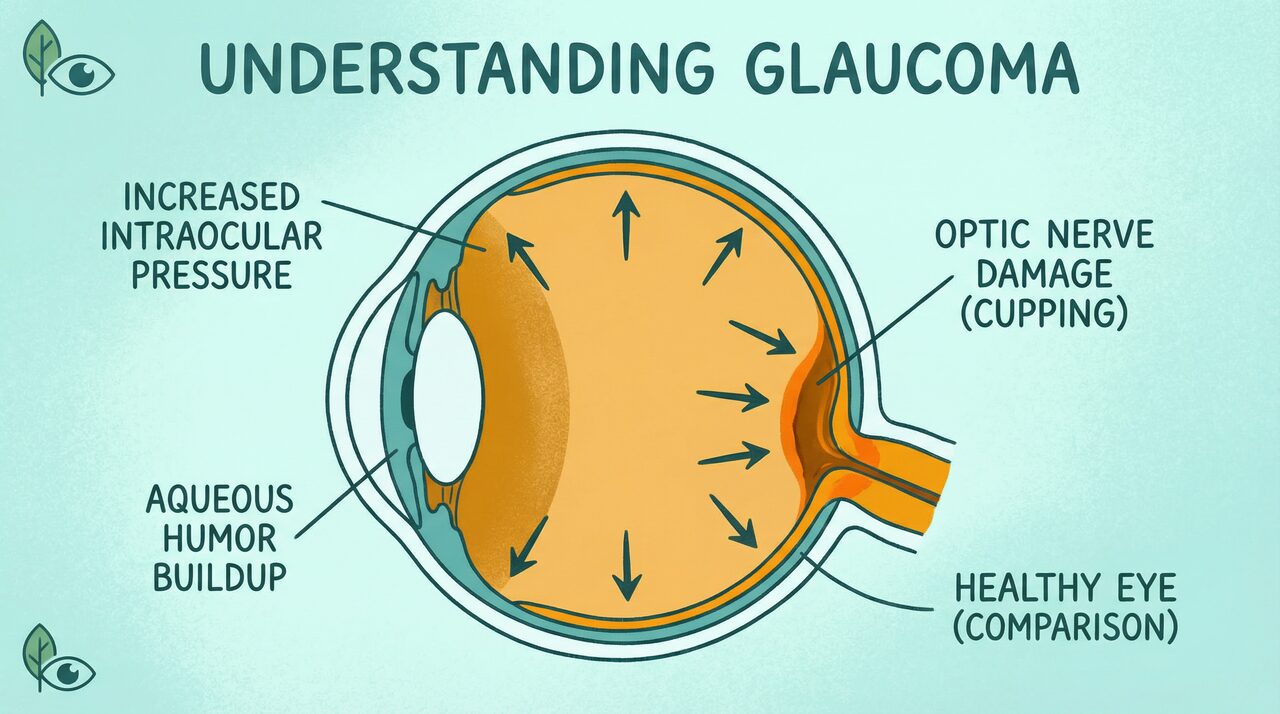
Glaucoma is a group of eye diseases that damage the optic nerve. Many people have no early symptoms, which makes screening especially important.
Quick summary
People with diabetes have higher risk of several eye problems, including diabetic retinopathy, cataracts, and glaucoma.
Key takeaways
- Open-angle glaucoma can progress slowly without obvious symptoms.
- Neovascular glaucoma can occur as a complication of advanced diabetic retinopathy.
- A glaucoma evaluation may include a dilated exam, eye pressure measurement, and visual field testing as needed.
- Treatment may include eye drops, laser treatment, urgent intervention, or surgery depending on the subtype and severity.
Why screening matters
Glaucoma damage usually cannot be reversed, but treatment can often slow or stop worsening. That is why early detection matters, especially before side vision loss is noticed.
Eye pressure is important, but it is not the whole story. Some people with high pressure do not have glaucoma, and some people with glaucoma can have pressure that seems normal. The eye doctor uses the full exam pattern.
Urgent symptoms
Most glaucoma is not sudden, but angle-closure glaucoma can cause intense eye pain with nausea, red eye, and sudden blurry vision. Those symptoms need emergency care.
If you have advanced diabetic retinopathy and are told abnormal vessels are affecting the iris or eye pressure, keep follow-up very carefully.
Practical takeaway
Do not wait for symptoms to screen for glaucoma. With diabetes, regular eye care protects more than reading vision.
Safety note
This article is not a substitute for medical care. Seek urgent care for intense eye pain, nausea with red eye, sudden blurry vision, halos, sudden vision loss, or symptoms that feel unsafe.
What to ask your care team
- How often should I be screened for glaucoma?
- Is my eye pressure, optic nerve, or visual field concerning?
- What urgent symptoms should I know?
Related reading
Source summary
- Glaucoma, National Eye Institute. Patient guidance. Accessed June 5, 2026. Source
- Vision Loss and Diabetes, Centers for Disease Control and Prevention. Patient guidance. Accessed June 5, 2026. Source
- Diabetic Eye Disease, National Institute of Diabetes and Digestive and Kidney Diseases. Patient guidance. Accessed June 5, 2026. Source
- Get a Dilated Eye Exam, National Eye Institute. Patient guidance. Accessed June 5, 2026. Source