The short answer
Laser for advanced (proliferative) retinopathy puts hundreds of tiny burns in the outer retina so abnormal blood vessels shrink. It’s done in clinic with numbing drops, often over 1 to 3 visits.
Vision is blurry for the rest of the day and you can’t drive home. It protects central sight, but can reduce side and night vision a little.
Being told you need laser can be frightening. It helps to know what it’s for, what it feels like and what happens afterwards.
Why is laser used?
In advanced retinopathy, called proliferative, parts of the retina are short of oxygen. They send out signals that make fragile new blood vessels grow. These can bleed into the eye or pull on the retina, and that’s how sight is lost.
Laser treats the outer retina with hundreds of tiny burns. The treated areas need less oxygen, the signals die down and the abnormal vessels shrink.
The full name is panretinal photocoagulation, or PRP. It’s a trade: you give up a little side vision to protect the central vision you read and drive with.
There’s a second, gentler kind called macular laser, used for swelling at the centre of the retina. See how macular oedema is treated.
Who needs it?
US guidance says panretinal laser is indicated to reduce the risk of vision loss in high-risk proliferative retinopathy, and in some people with severe retinopathy just short of that stage.
UK guidance says it should be offered when proliferative retinopathy is first diagnosed, started within 4 weeks if possible, and completed within 4 weeks of starting. If you have high-risk features, it may be offered the same day.
That urgency matters. Don’t put it off because your vision seems fine. It often is, right up until a bleed.
What happens on the day?
- Drops widen your pupil and numb the eye. Sometimes a numbing injection around the eye is used.
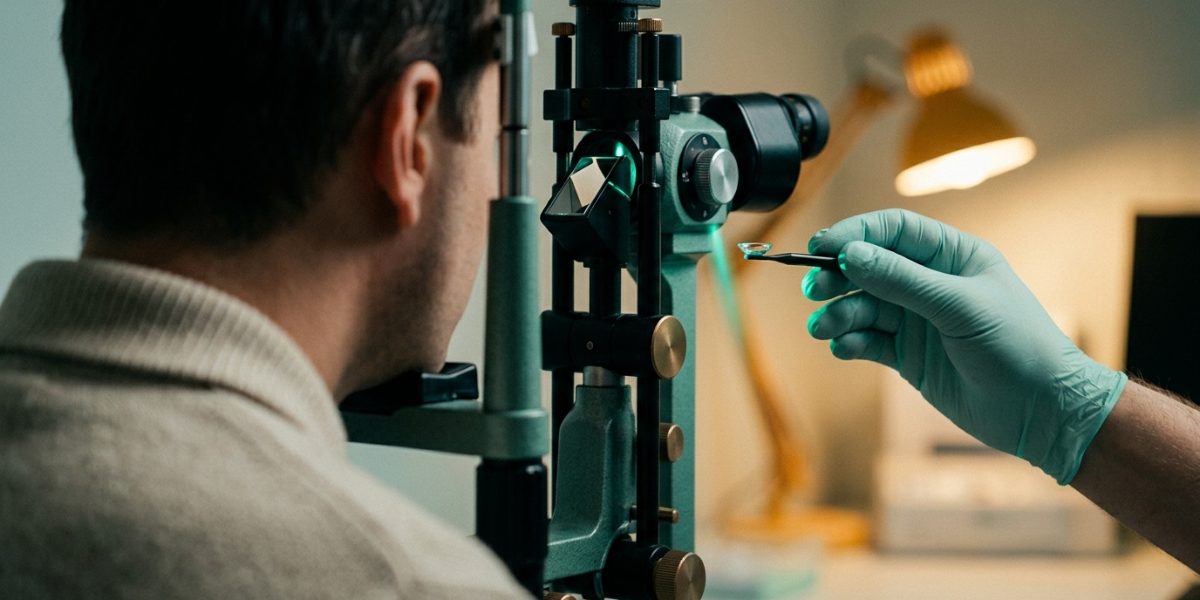
- You sit at a machine like the one used for eye examinations. A special contact lens is placed on the eye to hold it steady and focus the laser.
- You’ll see bright flashes. Some people feel nothing. Others feel stinging or a dull ache, especially later in a session.
- A session usually lasts 20 to 40 minutes.
- Treatment is often split over 1 to 3 visits.
Tell the doctor if it hurts. They can pause, adjust the settings or add more anaesthetic.
What is recovery like?
- Vision is blurry and dazzled for the rest of the day. You must not drive home.
- Bring sunglasses. Your pupils stay wide for a few hours.
- The eye may ache. Simple pain relief such as paracetamol usually helps.
- Most people are back to normal activities the next day.
The laser doesn’t improve vision. Its job is to stop it getting worse, and you may not notice any change at all.
What are the side effects?
- Some loss of side (peripheral) vision.
- Poorer night vision, and slower adjustment going from bright to dim light.
- Some change in colour vision.
- Swelling at the centre of the retina, which can blur vision for a while.
For most people the benefits clearly outweigh these. Untreated proliferative retinopathy carries a high risk of severe sight loss.
How does it compare with injections?
Anti-VEGF injections, the same ones used for macular oedema, also shrink abnormal vessels. Two trials compared them with laser.
| Trial | Result |
|---|---|
| US trial, 394 eyes, 2 years (ranibizumab vs laser) | Vision was no worse with injections. The laser group had more side-vision loss, more surgery for bleeding (15% vs 4%) and more macular oedema (28% vs 9%). |
| UK CLARITY trial, 232 people, 1 year (aflibercept vs laser) | Vision was about 4 letters better with injections |
So why is laser still the usual first choice in many places? Because it lasts. Once laser is complete, the effect is long-term. Injections wear off and have to be repeated, sometimes monthly, and missing visits can let the disease return quickly.
US guidance calls injections a reasonable alternative for some people. Many end up having both.
Will I still be able to drive?
Not on the day. After that, it depends on your vision.
Most people keep their licence. But because laser can narrow side vision, licensing authorities may ask for a visual field test. In the UK, you must tell DVLA if you’ve had laser treatment for diabetic retinopathy.
What should I watch for afterwards?
Contact your eye unit urgently if you notice:
- A sudden shower of new floaters or a red haze.
- A dark curtain or shadow across your vision.
- Sudden loss of vision.
- Severe pain.
See sudden vision changes: when it’s an emergency.
What else protects my eyes?
Laser treats the damage. It doesn’t treat the cause. Steady glucose, blood pressure and cholesterol slow retinopathy, and you’ll still need regular checks for life.
The bottom line
Laser is quick, done in clinic, and very good at preventing severe sight loss. Expect a blurry day, arrange a lift, and don’t delay it.
More: why you need a regular dilated eye exam and our diabetes complications guide.
Sources
- American Diabetes Association. Standards of Care in Diabetes 2026, section 12: Retinopathy, neuropathy, and foot care.
- National Institute for Health and Care Excellence. Diabetic retinopathy: management and monitoring (NG242).
- Gross JG and colleagues. Panretinal photocoagulation vs intravitreous ranibizumab for proliferative diabetic retinopathy. JAMA, 2015.
- Sivaprasad S and colleagues. Intravitreal aflibercept versus panretinal photocoagulation for proliferative diabetic retinopathy (CLARITY). The Lancet, 2017.
- National Eye Institute. Laser treatment for diabetic retinopathy.
- GOV.UK. Diabetic retinopathy and driving.
General public information, not personalised treatment advice. Children, pregnancy and complex health conditions need individual specialist advice. Don’t start, stop or change a medicine without speaking to your own healthcare team.