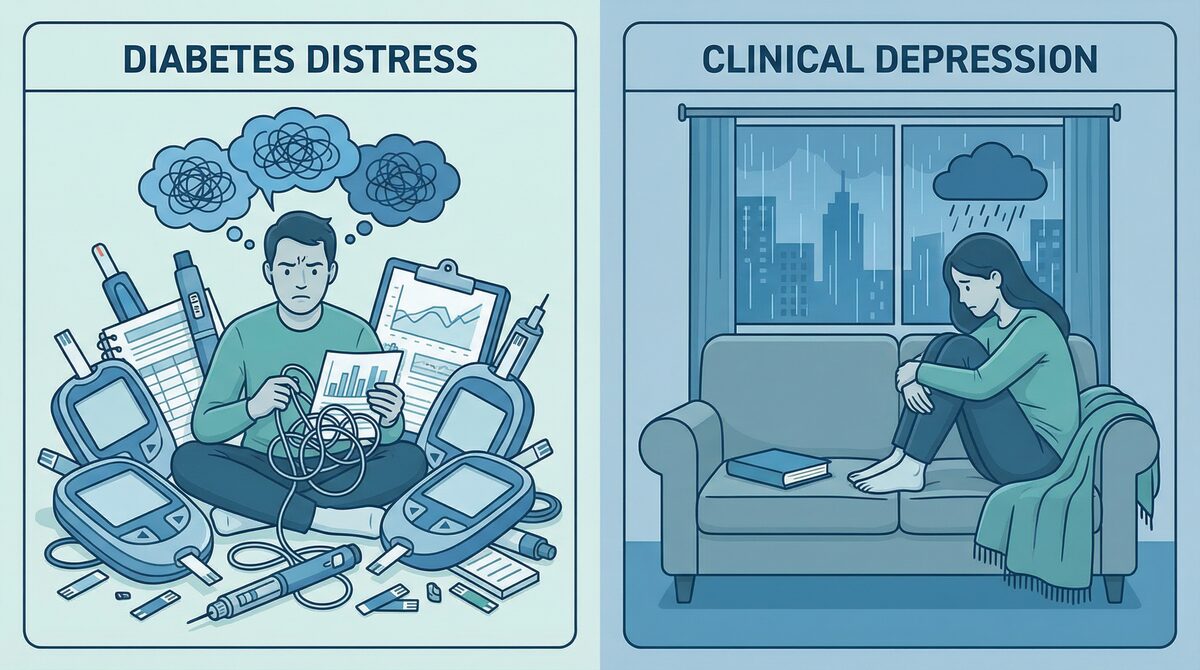
Diabetes distress and clinical depression can look similar from the outside, but they are not the same. Diabetes distress is the emotional burden of living with diabetes. Depression is a mental health condition that affects mood, interest, energy, sleep, appetite, concentration, and sometimes safety.
Quick summary
Both deserve attention. The difference matters because the most helpful support may not be identical.
Key takeaways
- Diabetes distress is tied closely to diabetes tasks and pressure.
- Depression can affect many areas of life, not only diabetes.
- The two can overlap.
- Screening and honest conversations can help guide support.
Signs of diabetes distress
- Feeling overwhelmed by glucose numbers or appointments.
- Avoiding checks, medicines, or diabetes decisions because it feels too much.
- Feeling judged, blamed, or exhausted by diabetes.
- Fear of complications or low blood sugar.
- Conflict around food, devices, or treatment tasks.
Signs depression may be present
Depression may include persistent sadness, loss of interest, hopelessness, sleep or appetite changes, low energy, poor concentration, guilt, or thoughts of death or self-harm. It can also make diabetes care harder, which can then increase distress.
A clinician may use screening questions and ask about duration, severity, function, and safety.
Practical takeaway
If diabetes feels emotionally heavy, name it. Distress and depression are both real, and both can be treated or supported.
Safety note
This article is not a substitute for medical care. Seek urgent help now for suicidal thoughts, self-harm risk, feeling unable to stay safe, severe confusion, or medical symptoms that feel dangerous.
What to ask your care team
- Could stress, sleep, anxiety, depression, medicines, illness, or glucose patterns be affecting how I feel?
- Which symptoms should prompt urgent medical or mental health support?
- Would diabetes education, counseling, peer support, medication review, or a safety plan help?
Related reading
Source summary
- Diabetes and Mental Health, Centers for Disease Control and Prevention. Patient guidance. Accessed June 5, 2026. Source
- Depression, National Institute of Mental Health. Patient guidance. Accessed June 5, 2026. Source
- Depression, MedlinePlus, National Library of Medicine. Patient guidance. Accessed June 5, 2026. Source
- Managing Diabetes, National Institute of Diabetes and Digestive and Kidney Diseases. Patient guidance. Accessed June 5, 2026. Source