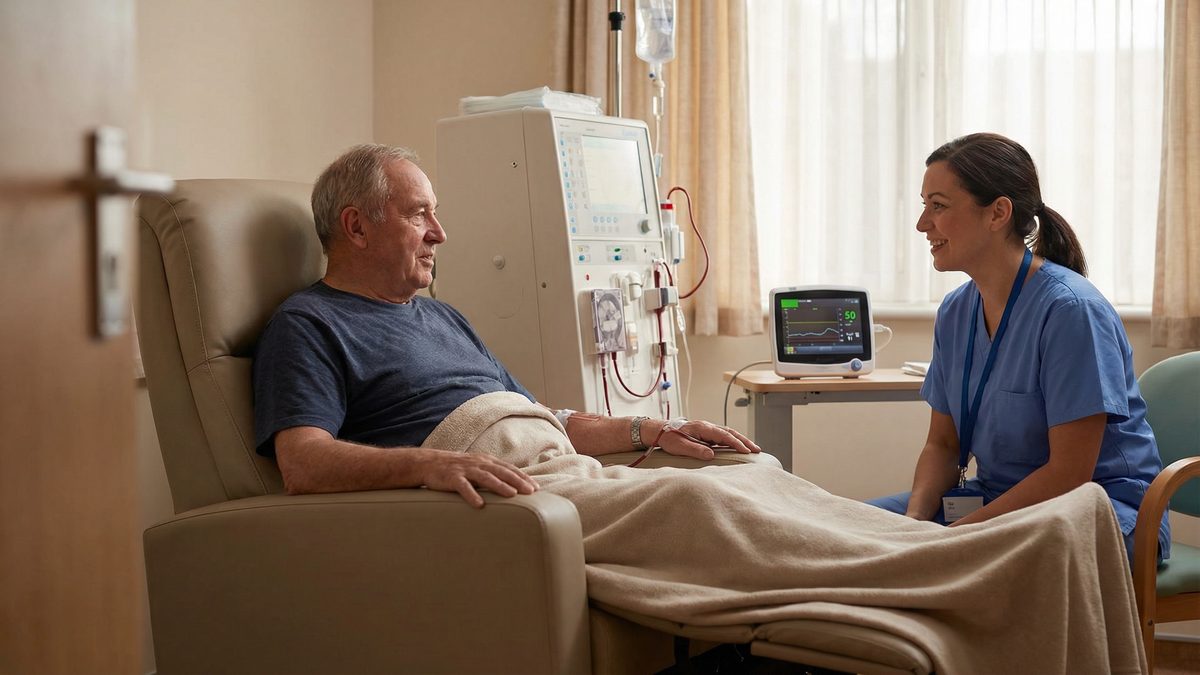
Dialysis can become necessary when kidneys can no longer do enough work to keep the body safe. For people with diabetes, dialysis care also affects glucose patterns, medicines, meals, fluid, blood pressure, and infection risk.
Quick summary
Starting dialysis is a major transition. Understanding the basics can make appointments and decisions less overwhelming.
Key takeaways
- Dialysis replaces some kidney functions, but it does not cure kidney disease.
- Hemodialysis and peritoneal dialysis work differently and have different routines.
- Insulin and medicine needs may change as kidney function and dialysis schedules change.
- Diet, fluid, potassium, phosphorus, blood pressure, and access care become central parts of daily planning.
Types of dialysis
Hemodialysis filters blood through a machine, often at a dialysis center several times a week, though home options exist for some people. It requires reliable vascular access, such as a fistula, graft, or catheter.
Peritoneal dialysis uses the lining of the abdomen as a filter and is often done at home. It requires a catheter in the abdomen and careful infection prevention. The best option depends on medical needs, lifestyle, support, and local services.
How diabetes care changes
Kidney failure can change how insulin and some diabetes medicines behave in the body. Dialysis days can also change appetite, meal timing, and glucose patterns. Some people have more lows, some have highs, and many need closer monitoring during the transition.
A kidney dietitian may adjust protein, sodium, potassium, phosphorus, carbohydrates, and fluid guidance. Advice can differ from earlier diabetes nutrition advice, so do not assume old meal rules still apply.
Questions to ask
- Which dialysis option fits my medical situation and home support?
- How will my diabetes medicines change?
- What glucose patterns should I watch on dialysis days?
- What should I know about access care and infection signs?
- Who should I call for fluid overload, low blood pressure, fever, or severe symptoms?
Practical takeaway
Dialysis planning works best when kidney, diabetes, diet, and primary care teams communicate. Bring medication lists and glucose data to dialysis-related visits.
Safety note
This article is not a substitute for medical care. Seek urgent care for chest pain, severe shortness of breath, confusion, fever, access-site redness or drainage, severe low blood sugar, or signs of fluid overload.
What to ask your care team
- What does this mean for my diabetes, heart, kidney, medicine, or monitoring plan?
- Which symptoms, readings, or side effects should prompt urgent care?
- Do any tests, prescriptions, follow-up visits, or safety instructions need review?
Source summary
- Kidney Failure, National Institute of Diabetes and Digestive and Kidney Diseases. Patient guidance. Accessed June 3, 2026. Source
- Dialysis, National Kidney Foundation. Patient guidance. Accessed June 3, 2026. Source
- Diabetic Kidney Disease, National Institute of Diabetes and Digestive and Kidney Diseases. Patient guidance. Accessed June 3, 2026. Source
- Diabetes Testing, Centers for Disease Control and Prevention. Patient guidance. Accessed June 3, 2026. Source