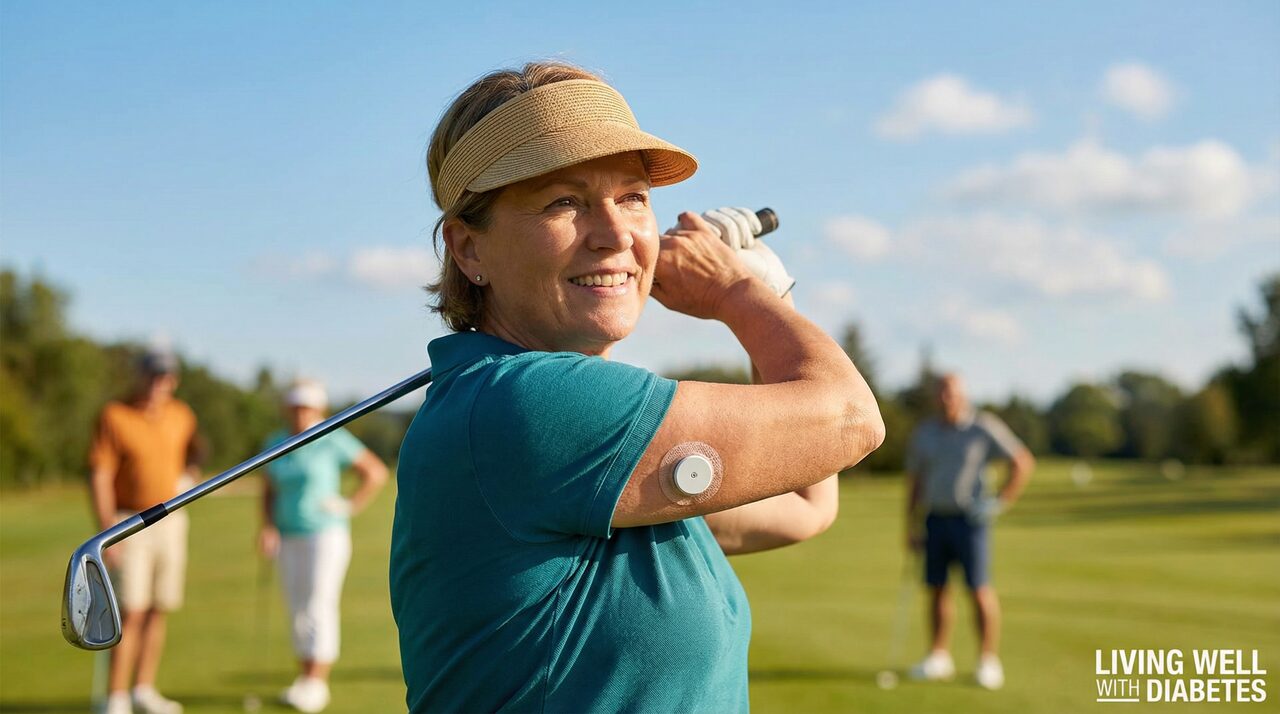
Quick summary: Golf can support activity, balance, social connection, and time outdoors. For people with diabetes, the safest round starts before the first tee.
Why golf can affect glucose
Golf can involve hours of walking, standing, heat exposure, and delayed meals. That can lower or raise glucose depending on medicines, insulin, food, stress, hydration, and intensity.
People using insulin or medicines that can cause low blood sugar should carry fast-acting carbohydrate and know their personal plan for activity.
Foot care matters
Comfortable shoes and dry socks are important, especially for people with neuropathy, circulation problems, or a history of foot ulcers. Small blisters can become serious when diabetes-related foot risk is present.
Check feet after a long round. Look for redness, blisters, cuts, swelling, or areas that feel unusual. Seek medical care for wounds that are not healing.
Heat, hydration, and timing
Hot weather can change glucose patterns and may affect some diabetes medicines and supplies. Keep water available and protect insulin, meters, strips, and sensors from temperature extremes.
Plan meals and snacks around tee time. If you use a CGM, watch trends, but confirm readings with a finger-stick test if symptoms do not match the sensor.
Practical takeaway
Pack glucose supplies, water, snacks, comfortable footwear, and your usual diabetes kit. The best golf plan is simple enough to follow during a real round.
Safety note: This article is for general education. It cannot replace advice from your own diabetes or medical team.