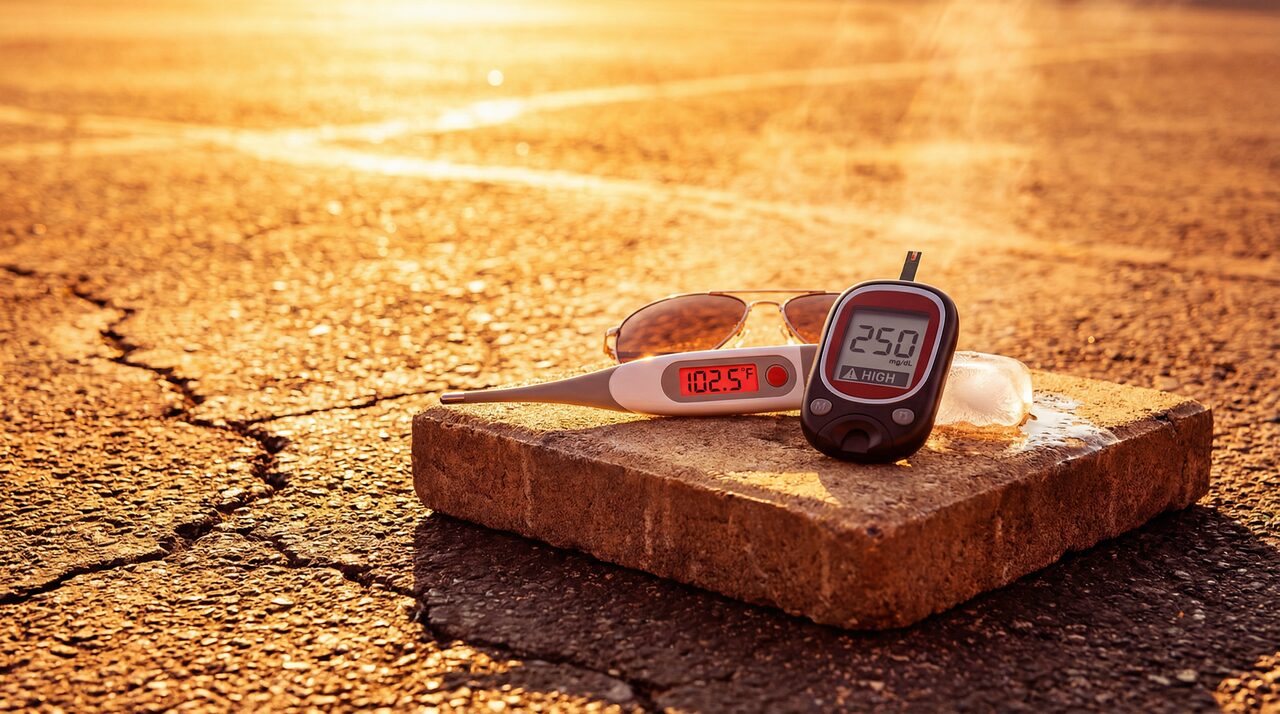
Hot weather can make diabetes harder to manage. Heat may affect hydration, activity, appetite, insulin storage, device adhesives, and how quickly low blood sugar symptoms are noticed.
Quick summary
The safest summer plan is not complicated. It means protecting supplies, drinking fluids, checking glucose as advised, and acting early when symptoms do not feel right.
Key takeaways
- Heat can damage insulin and some diabetes supplies.
- Dehydration can make glucose harder to interpret and may worsen illness.
- Activity in heat can increase low-blood-sugar risk for some people.
- CGM readings should be checked against symptoms when they do not make sense.
What to watch
- More thirst, darker urine, dizziness, weakness, or confusion.
- Unexpected highs or lows.
- Loose CGM or pump adhesive from sweat or water.
- Insulin that has been left in a hot car, direct sun, or extreme heat.
- Heat illness symptoms such as heavy sweating, cramps, nausea, headache, or faintness.
Summer safety moves
Keep insulin and supplies away from direct heat, but do not freeze insulin. Carry water and fast-acting carbohydrate if you are at risk for lows.
If you feel unwell, check glucose and follow your sick-day plan. People at risk for ketones should know when to check them.
Practical takeaway
In hot weather, treat hydration, insulin storage, and glucose checks as one safety plan.
Safety note
This article is not a substitute for medical care. Seek urgent care for confusion, fainting, heat illness, repeated vomiting, dehydration, ketones, severe low blood sugar, or symptoms that feel unsafe.
What to ask your care team
- How should I store insulin and supplies in heat?
- When should I check more often or check ketones?
- What symptoms mean I should stop activity and get help?
Source summary
- Managing Diabetes in the Heat, Centers for Disease Control and Prevention. Patient guidance. Accessed June 5, 2026. Source
- Heat Illness, MedlinePlus, National Library of Medicine. Patient guidance. Accessed June 5, 2026. Source
- Dehydration, MedlinePlus, National Library of Medicine. Patient guidance. Accessed June 5, 2026. Source
- Insulin, Medicines, and Other Diabetes Treatments, National Institute of Diabetes and Digestive and Kidney Diseases. Patient guidance. Accessed June 5, 2026. Source