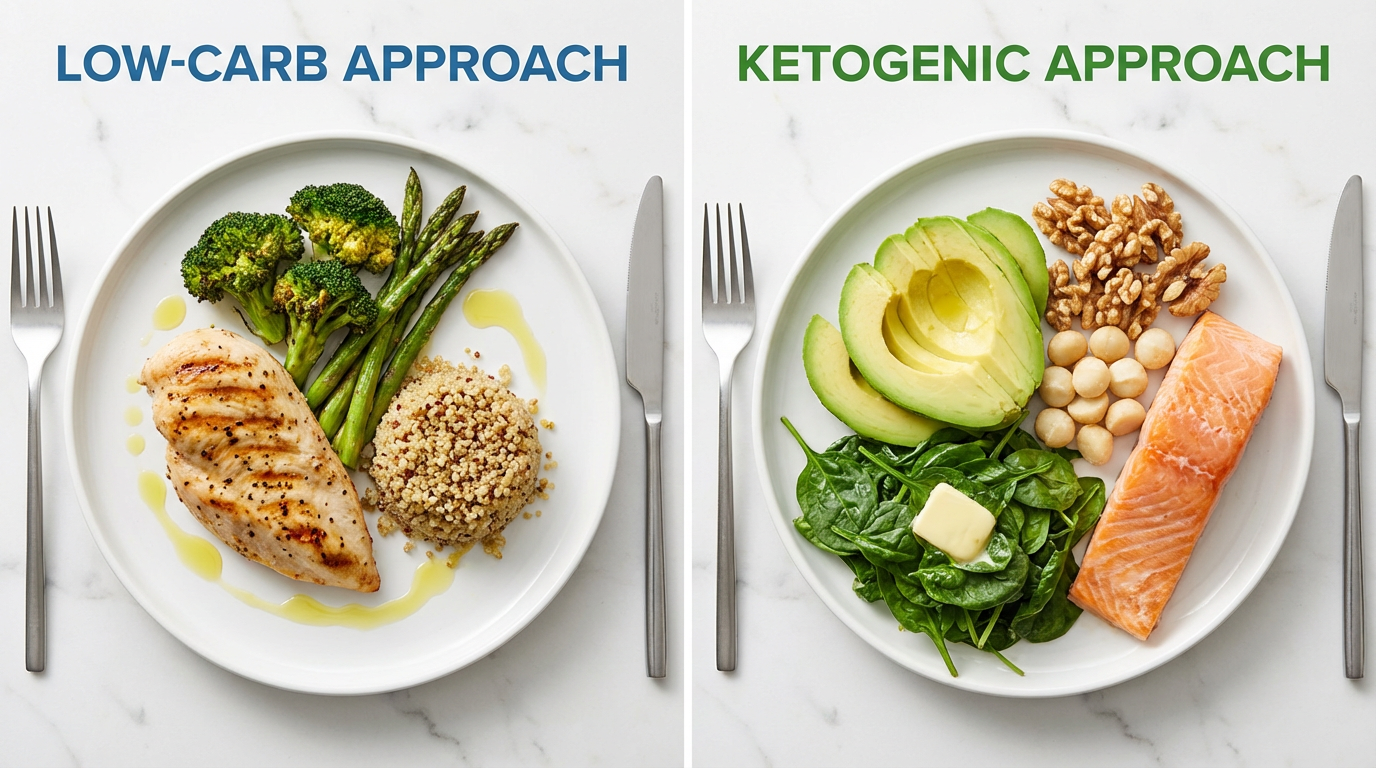
Short summary: A low-carb eating pattern and a ketogenic diet both reduce carbohydrate intake, but they are not the same plan. For insulin resistance, the better choice is usually the one that improves glucose patterns, supports nutrition, and can be followed safely.
Key takeaways
- Low carb is a broad approach. Keto is a stricter very-low-carb pattern designed to produce ketosis.
- Carbohydrate reduction can help some people with blood sugar management, but food quality and sustainability still matter.
- Anyone using insulin, sulfonylureas, or other glucose-lowering medicines should discuss major carb changes with a clinician first.
Low carb and keto are different
Low carb usually means eating fewer carbohydrates than before while still including foods such as beans, fruit, yogurt, whole grains, or starchy vegetables in planned portions. Keto is more restrictive. It typically keeps carbohydrate intake low enough that the body makes ketones for fuel.
For insulin resistance, the goal is not simply to eat the fewest carbs possible. The goal is to improve glucose patterns, reduce excess added sugar and refined grains, get enough fiber and protein, and keep the plan workable over time.
How carbs affect insulin resistance
Carbohydrates break down into glucose, so they can raise blood sugar after meals. The CDC notes that the speed and size of that rise depend on the food and what it is eaten with. Carbs paired with protein, fat, or fiber often raise glucose more slowly than sugary drinks or refined grains eaten alone.
That is why a lower-carb plan built around vegetables, beans or lentils in planned portions, nuts, seeds, fish, eggs, poultry, tofu, plain yogurt, olive oil, and high-fiber foods is different from a low-carb plan built mainly around processed meats and low-fiber packaged foods.
Where keto may fit
Keto can lower glucose levels for some people because it sharply reduces the main nutrient that raises blood sugar after meals. It may also reduce hunger for some people. But it is harder to follow, can limit fiber-rich foods if not planned carefully, and may not be appropriate during pregnancy, with a history of eating disorders, with some kidney or liver conditions, or with medication regimens that increase hypoglycemia or ketoacidosis risk.
Keto is not a casual experiment for people taking insulin, sulfonylureas, or SGLT2 inhibitors. Medication doses and safety monitoring may need adjustment when carbohydrate intake changes. That should be done with the prescribing clinician, not by trial and error.
Which is better for insulin resistance?
For many people, a moderate low-carb approach is the more practical first step. It can reduce large glucose spikes while still leaving room for vegetables, legumes, fruit, and whole foods that support heart and gut health.
A useful test is whether the eating pattern improves several markers at once: fasting glucose, after-meal glucose, A1C, triglycerides, blood pressure, weight if needed, energy, sleep, and relationship with food. A pattern that improves glucose but worsens cholesterol, constipation, fatigue, or food anxiety needs another look.
For a deeper foundation, see our insulin resistance guide, our low-carb vegetables guide, and our article on fiber and insulin resistance.
Practical takeaway
If you want to reduce carbohydrates, start with the highest-impact swaps: fewer sugary drinks, sweets, white bread, large rice or pasta portions, and ultra-processed snacks. Build meals around non-starchy vegetables, protein, healthy fats, and measured higher-fiber carbs. If you use glucose-lowering medication, ask your care team before making a major change.
Sources
- CDC: Diabetes Meal Planning
- NIDDK: Healthy Living with Diabetes
- American Diabetes Association: Understanding Carbohydrates
- American Diabetes Association: Positive Health Behaviors and Nutrition Therapy Standards 2026
- Diabetes Care: Nutrition Therapy for Adults With Diabetes or Prediabetes
Editorial review note: reviewed for medical accuracy, source consistency, patient-safety framing, plain-language readability, and non-promotional nutrition wording before publication.