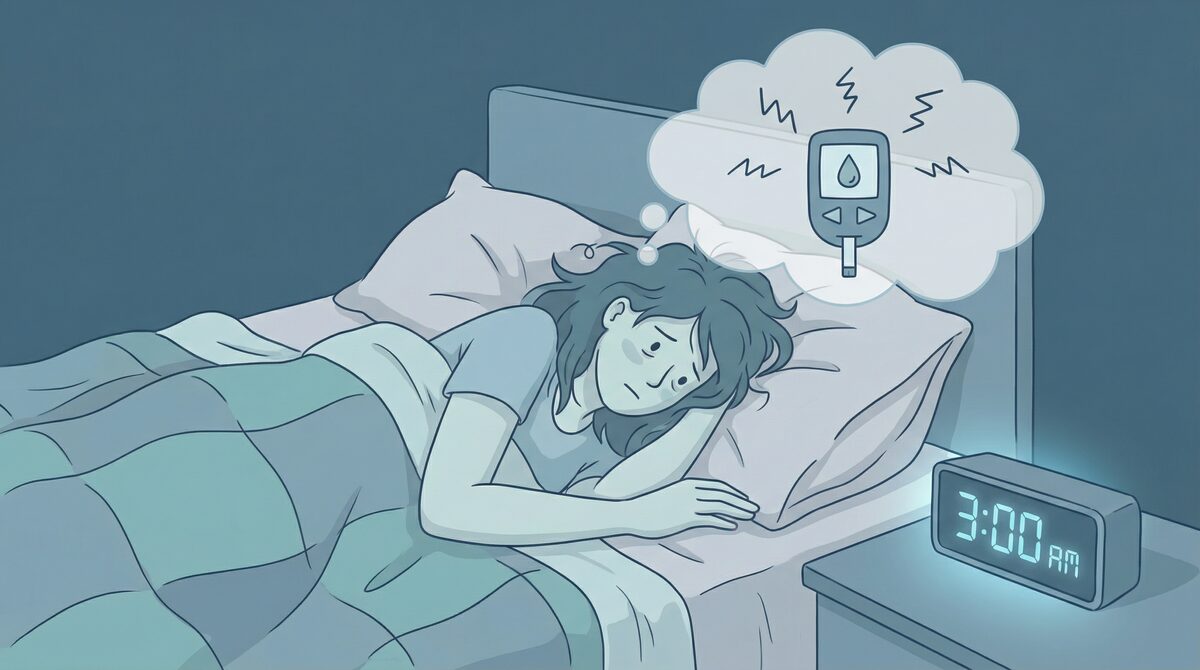
Sleep and stress often travel together. Stress can make sleep lighter or shorter, and poor sleep can make stress harder to handle. For people with diabetes, that combination can affect appetite, activity, medication routines, and glucose patterns.
Quick summary
The goal is not perfect sleep. The goal is to notice patterns and address the parts that can be changed safely.
Key takeaways
- Poor sleep can affect appetite, energy, mood, and diabetes routines.
- Stress can make sleep harder and may affect glucose patterns.
- Sleep apnea, pain, nocturia, low blood sugar, or high blood sugar can disrupt sleep.
- Persistent sleep problems deserve medical review.
What to track
- Bedtime and wake time.
- Nighttime glucose patterns if available.
- Caffeine, alcohol, late meals, and screen use.
- Snoring, choking, morning headaches, or daytime sleepiness.
- Nighttime urination, pain, anxiety, or low-blood-sugar symptoms.
What may help
A consistent wind-down routine, daylight exposure, regular movement, limiting late caffeine, and reviewing nighttime glucose patterns may help some people. If symptoms suggest sleep apnea, depression, anxiety, pain, or medication side effects, a medical review is important.
Do not assume poor sleep is just lack of discipline. It often has treatable causes.
Practical takeaway
If sleep and stress are affecting diabetes, track a week of patterns and bring them to your care team. Sleep is part of health, not a luxury.
Safety note
This article is not a substitute for medical care. Seek urgent care for chest pain, severe shortness of breath, confusion, severe low blood sugar, suicidal thoughts, or symptoms that feel unsafe.
What to ask your care team
- Could stress, sleep, anxiety, depression, medicines, illness, or glucose patterns be affecting how I feel?
- Which symptoms should prompt urgent medical or mental health support?
- Would diabetes education, counseling, peer support, medication review, or a safety plan help?
Related reading
Source summary
- Healthy Sleep, MedlinePlus, National Library of Medicine. Patient guidance. Accessed June 5, 2026. Source
- Sleep Deprivation and Deficiency, National Heart, Lung, and Blood Institute. Patient guidance. Accessed June 5, 2026. Source
- Diabetes and Mental Health, Centers for Disease Control and Prevention. Patient guidance. Accessed June 5, 2026. Source
- Managing Diabetes, National Institute of Diabetes and Digestive and Kidney Diseases. Patient guidance. Accessed June 5, 2026. Source