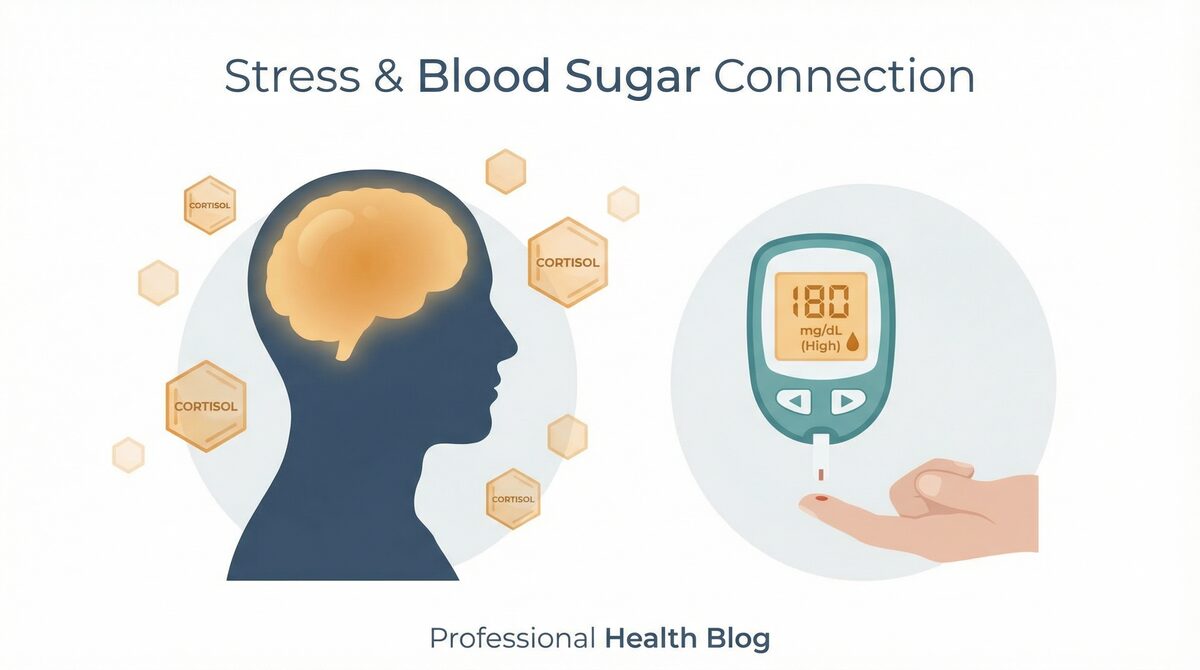
Stress can make blood sugar harder to predict, but cortisol is not the whole story. Stress hormones can raise glucose in some people, while stress can also change sleep, appetite, movement, alcohol use, medication timing, and monitoring routines.
Quick summary
Instead of blaming every high reading on stress, look for patterns. Glucose data, symptoms, sleep, meals, illness, and medicine timing usually tell a fuller story.
Key takeaways
- Stress hormones may raise glucose in some people, though the effect varies widely in timing and size.
- Stress can also lead to missed meals, poorer sleep, less activity, or missed medication.
- One high reading does not prove cortisol is the cause.
- Persistent diabetes distress, anxiety, or depression deserves support.
What cortisol may do
Cortisol and adrenaline help the body respond to pressure. They can make more glucose available, which may show up as higher readings. That response varies by person and by situation.
The key question is whether glucose changes repeat, match stress timing, and improve when routines stabilize.
What to track
- Glucose before, during, and after stressful periods.
- Sleep quality and bedtime changes.
- Meals, caffeine, alcohol, and activity.
- Illness, pain, missed medicines, and low blood sugar episodes.
- Mood, burnout, anxiety, or depression symptoms.
Practical takeaway
Treat stress as one possible variable. Track the basics first, then ask for help if stress is repeatedly disrupting diabetes care.
Safety note
This article is not a substitute for medical care. Do not change insulin or diabetes medicines based only on stress. Seek urgent care for severe low blood sugar, ketones, vomiting, chest pain, confusion, suicidal thoughts, or symptoms that feel unsafe.
What to ask your care team
- Could stress, sleep, anxiety, depression, medicines, illness, or glucose patterns be affecting how I feel?
- Which symptoms should prompt urgent medical or mental health support?
- Would diabetes education, counseling, peer support, medication review, or a safety plan help?
Related reading
Source summary
- Diabetes and Mental Health, Centers for Disease Control and Prevention. Patient guidance. Accessed June 5, 2026. Source
- Stress, MedlinePlus, National Library of Medicine. Patient guidance. Accessed June 5, 2026. Source
- Managing Diabetes, National Institute of Diabetes and Digestive and Kidney Diseases. Patient guidance. Accessed June 5, 2026. Source
- Diabetes Testing, Centers for Disease Control and Prevention. Patient guidance. Accessed June 5, 2026. Source