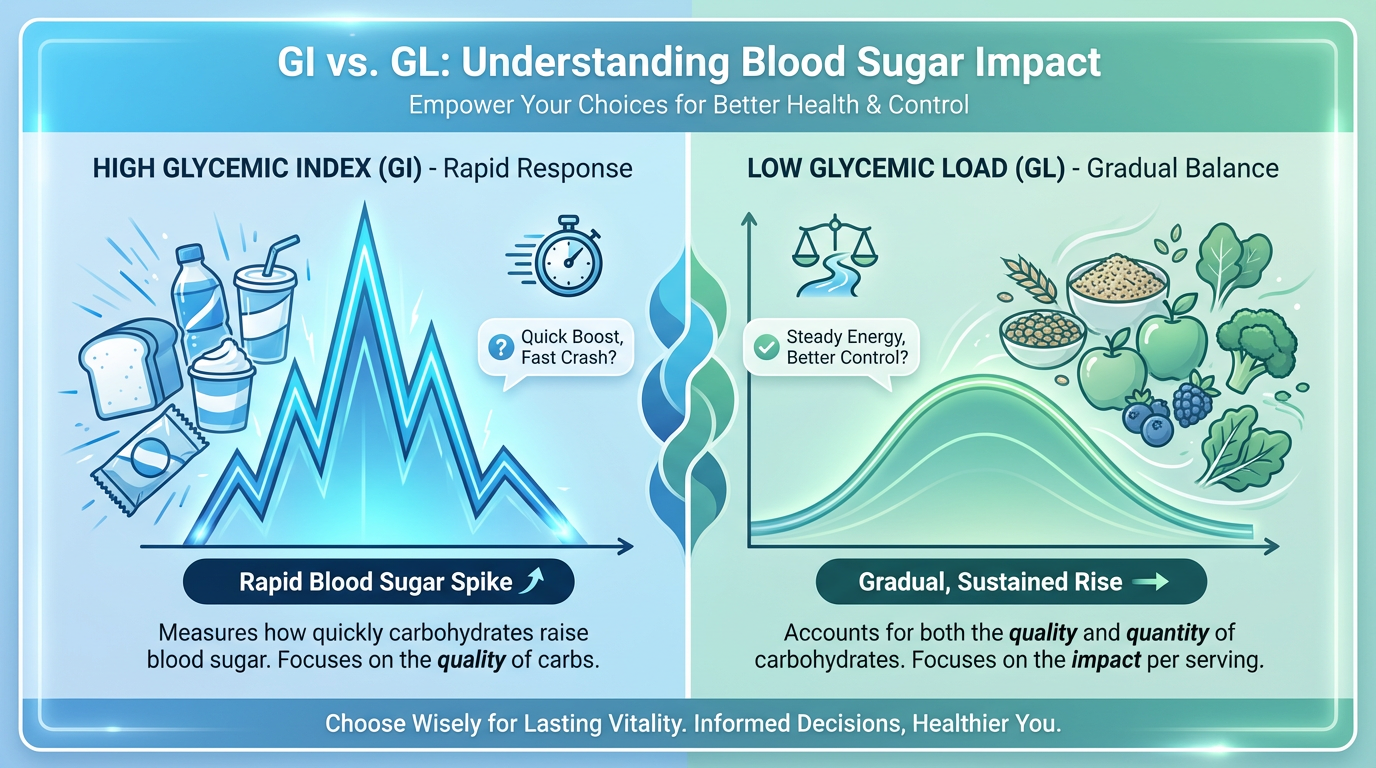
Quick summary: Glycemic index and glycemic load can help explain why some carbohydrate foods raise blood glucose differently, but they are tools, not perfect rules.
The difference in plain language
Glycemic index, often called GI, ranks carbohydrate-containing foods by how quickly they raise blood glucose compared with a reference food. Glycemic load, often called GL, combines the GI with the amount of carbohydrate in a usual serving.
That means a food can have a higher GI but a modest glucose effect if the portion is small, while a large portion of a lower-GI food can still raise glucose meaningfully.
Why the numbers are not everything
Blood glucose response can change based on portion size, cooking method, ripeness, fiber, protein, fat, mixed meals, medicines, activity, sleep, stress, and individual differences.
For many people with diabetes, carbohydrate amount and meal pattern are easier to use every day than memorizing long GI tables.
How to use GI and GL sensibly
Choose more high-fiber carbohydrates when possible, such as beans, lentils, whole grains, vegetables, and whole fruit. Pair carbohydrates with protein and healthy fats when appropriate. Keep portion sizes realistic.
If you use a glucose meter or continuous glucose monitor, your own readings can show how common meals affect you. Patterns are more useful than judging one meal in isolation.
Practical takeaway
Use GI and GL as background knowledge. For daily decisions, start with total carbohydrate amount, fiber, portion size, and what the food is eaten with.
Safety note: This article is for general education. It cannot replace advice from your own diabetes or medical team.