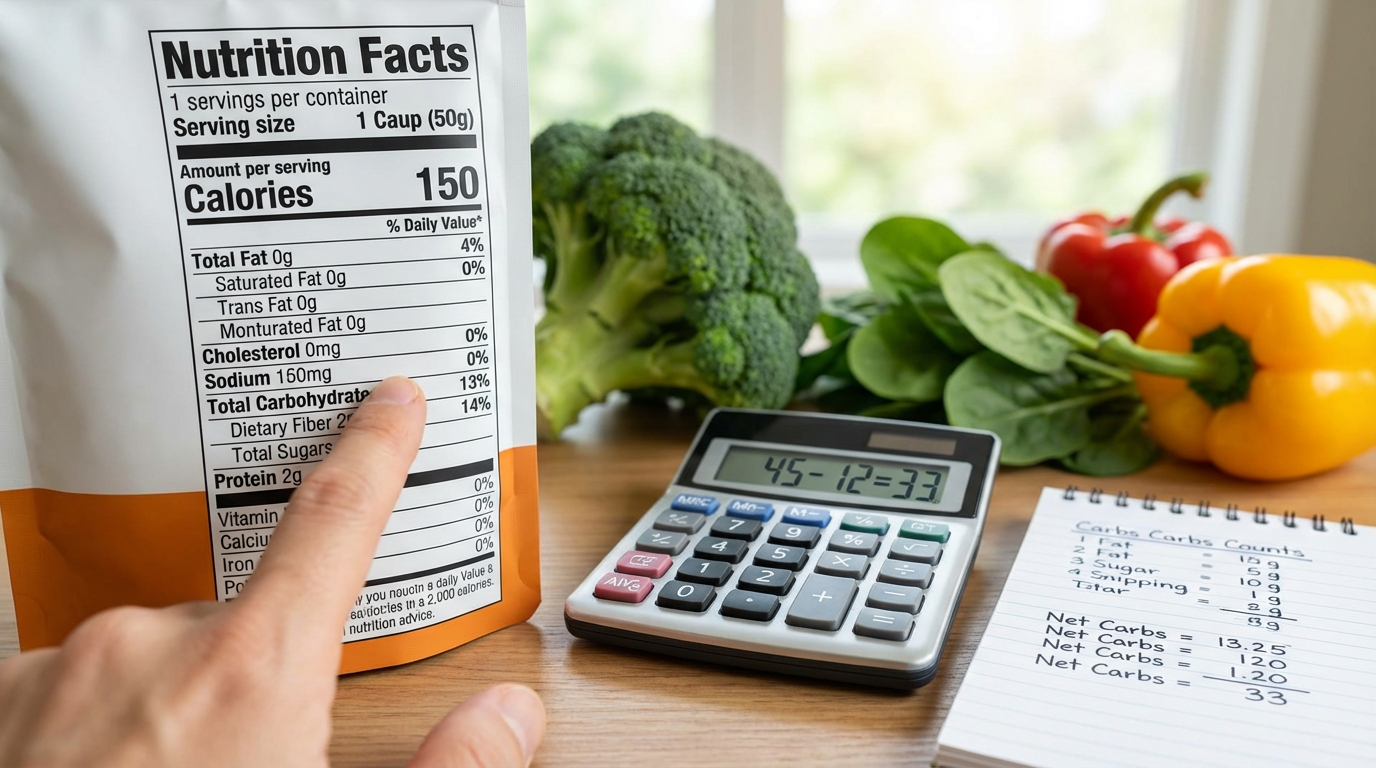
Short summary: “Net carbs” can be useful marketing language, but it is not the safest starting point for most diabetes decisions. For carb counting, total carbohydrate on the Nutrition Facts label is usually the number to check first.
Key takeaways
- The ADA says total carbohydrate includes starch, sugar, and fiber, and it is the number to pay attention to when carbohydrate counting.
- The CDC also directs readers to total carbohydrate grams on the Nutrition Facts label for carb counting.
- Net carbs are usually calculated by subtracting fiber and sometimes sugar alcohols, but formulas vary.
- Blood sugar response is individual, so glucose checks may be more useful than trusting a front-of-package net carb claim.
Total carbs means all carbohydrate types
Total carbohydrate on a Nutrition Facts label includes starch, sugar, and fiber. This is why diabetes educators often begin with total carbohydrate when teaching carb counting. The CDC notes that people who take mealtime insulin count carbs to match insulin doses to food and drink, which makes the starting number important.
Total carbohydrate is not a judgment about whether a food is healthy. Beans, yogurt, fruit, milk, oats, lentils, and starchy vegetables contain carbohydrates and can still fit many diabetes meal plans.
What net carbs tries to estimate
Net carbs usually tries to estimate the carbohydrates that may have a stronger glucose effect. Many formulas subtract fiber from total carbohydrate. Some also subtract part or all of sugar alcohols. The problem is that not every company uses the same formula, and sugar alcohols do not affect everyone the same way.
Net carbs has no official FDA definition and is not a regulated term on the Nutrition Facts label. It is also not a separate required line on the label. Total carbohydrate, dietary fiber, total sugars, added sugars, and sugar alcohols when present are the label details readers can verify directly.
Dietary fiber is listed under total carbohydrate on the label. That is why subtracting fiber changes a net-carb calculation but does not change the official total carbohydrate number on the Nutrition Facts label.
Fiber usually has less direct glucose effect than starches and sugars, but that does not mean every “low net carb” product is a good choice. Some products are still high in calories, saturated fat, sodium, sugar alcohols, or highly processed ingredients.
Why total carbs are safer for diabetes decisions
If you use insulin, sulfonylureas, or a structured meal plan, undercounting carbohydrates can lead to blood sugar surprises. A net carb claim may make a food look easier on glucose than it is for you.
A safer approach is to start with the label’s total carbohydrate, notice fiber and sugar alcohols, and then check your own glucose response. If you use a continuous glucose monitor, compare similar meals rather than one unusual reading. If you use fingerstick checks, ask your care team when post-meal checks are most useful.
How to read the label
- Check serving size first.
- Check servings per container.
- Look at total carbohydrate.
- Then review fiber, total sugars, added sugars, and sugar alcohols if listed.
- Compare your glucose response with what the label led you to expect.
When net carbs may still be discussed
Some diabetes teams may discuss fiber, sugar alcohols, or net-carb-style estimates in advanced carb counting. That is different from relying on a packaged-food claim without context. If your glucose targets, insulin dosing, digestion, or hypoglycemia risk are affected, ask for individualized guidance.
These guides cover the next practical questions: portion control and carb counting, diabetes diet patterns, and low carb vs keto.
Practical takeaway
Use total carbohydrate as your starting point. Treat net carbs as an estimate that may or may not match your glucose response. If you dose mealtime insulin or often have lows or highs after packaged foods, ask a diabetes educator how to count fiber and sugar alcohols safely.
Sources
- American Diabetes Association: Get to Know Carbs
- American Diabetes Association: Types of Carbohydrates
- CDC: Carb Counting
- FDA: How to Understand and Use the Nutrition Facts Label
- FDA: Total Carbohydrate on the Nutrition Facts Label
Editorial review note: reviewed for medical accuracy, source consistency, nutrition-label interpretation, insulin-safety caveats, and plain-language readability before publication.