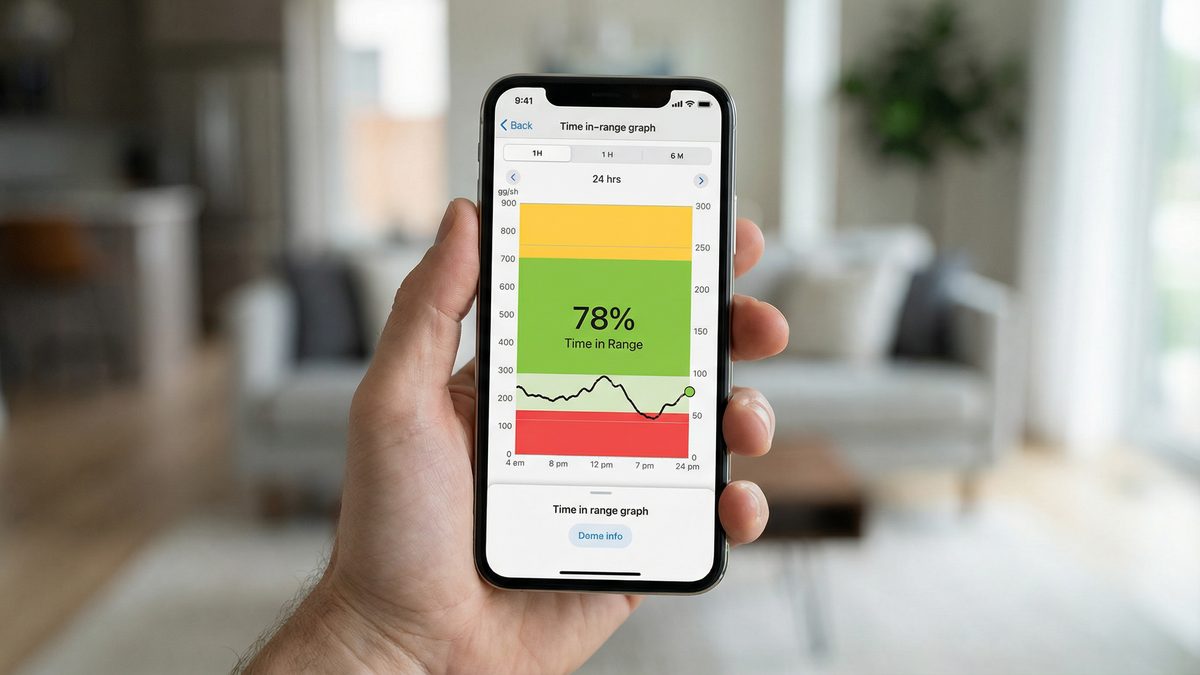
Time in Range: The New Gold Standard for Diabetes Management
For decades, the A1C test has been the primary metric for diabetes management. But there’s a new player changing the game: Time in Range. This powerful approach gives people with diabetes a more complete picture of their glucose levels throughout the day and night, offering insights that a single number like A1C simply cannot provide. Discover why Time in Range is revolutionizing diabetes care and how it could help you take control of your health in ways never before possible.
Living with diabetes means constantly balancing multiple factors that affect blood glucose levels. Until recently, success in diabetes management was primarily measured by the A1C test—a blood test that provides an average of your blood glucose levels over the past 2-3 months. While A1C remains valuable, diabetes care is evolving toward a more comprehensive approach with Time in Range (TIR) at its center.
What Exactly Is Time in Range?
Time in Range refers to the percentage of time your blood glucose levels stay within your target range—typically between 70-180 mg/dL (3.9-10.0 mmol/L) for most adults with diabetes. Unlike A1C, which gives you a single number representing a long-term average, TIR provides a detailed picture of your daily glucose patterns.
For example, if your glucose levels stay within range for 18 hours out of a 24-hour day, your Time in Range would be 75%. The higher your percentage, the more time your glucose levels are where they should be—reducing both short-term symptoms and long-term complications.
ℹ️ Did You Know?
International diabetes organizations now recommend that most adults with diabetes aim for at least 70% Time in Range (about 17 hours per day). For older adults or those at high risk of hypoglycemia, a target of >50% may be more appropriate. These targets are individualized based on your specific health situation.
Why Time in Range Matters More Than You Might Think
Imagine two people with identical A1C results of 7.0%. On paper, their diabetes management might appear equally successful. However, their daily experiences could be worlds apart:
Person A spends most of their time with glucose levels between 70-180 mg/dL, with occasional mild highs and lows. Their Time in Range is 75%.
Person B experiences extreme swings—from dangerously low levels that cause anxiety and confusion to very high levels that leave them feeling exhausted. Despite these rollercoaster fluctuations, their average (A1C) works out to 7.0%. Their Time in Range is just 40%.
While both have the same A1C, Person B faces significantly more daily symptoms, stress, and potentially greater risk of complications. This example illustrates why looking beyond A1C to Time in Range provides a much clearer picture of diabetes management.
The Science Behind Time in Range
Research increasingly supports the importance of Time in Range. Studies have shown that increased TIR correlates with reduced risk of diabetes complications, including:
- Lower risk of retinopathy (eye disease)
- Reduced progression of microalbuminuria (early kidney damage)
- Decreased likelihood of developing neuropathy (nerve damage)
- Improved quality of life and reduced diabetes distress
For every 10% increase in Time in Range (about 2.4 more hours per day within target), there’s a meaningful reduction in complication risk. This makes even small improvements in TIR worth celebrating.
How Time in Range Complements A1C
| A1C | Time in Range |
|---|---|
| Measures average glucose over 2-3 months | Shows daily patterns and fluctuations |
| Cannot show highs and lows | Reveals time spent too high or too low |
| Typically measured every 3-6 months | Can be monitored daily for immediate feedback |
| Can be affected by certain conditions (anemia, pregnancy) | Not affected by these conditions |
The ideal approach is to use both metrics together. A1C provides the long-term view of your overall glucose management, while Time in Range offers actionable insights into your day-to-day experience.
How to Measure Your Time in Range
Measuring Time in Range requires continuous glucose monitoring (CGM) technology. These small wearable devices track your glucose levels throughout the day and night, typically taking readings every 5-15 minutes. Popular CGM systems include:
- Dexcom G6 and G7
- FreeStyle Libre 2 and 3
- Medtronic Guardian Connect
- Eversense
Each system has companion software or apps that automatically calculate your Time in Range and display it in easy-to-understand graphs and percentages. Many can also show patterns based on time of day, meals, exercise, and more.
✅ Practical Tip
If you don’t have access to CGM technology, you can still apply Time in Range concepts by increasing the frequency of your fingerstick checks. While not as comprehensive as continuous monitoring, checking before and after meals, before and after exercise, and occasionally during the night can help you identify patterns and make improvements.
Strategies to Improve Your Time in Range
Improving your Time in Range doesn’t happen overnight, but consistent small changes can lead to significant improvements. Here are practical strategies that can help:
1. Identify and Address Pattern Problems
Review your CGM data to spot recurring patterns. Do you consistently go high after breakfast? Drop low during afternoon exercise? These patterns point to specific adjustments you can make.
2. Mind Your Meal Timing and Composition
The timing of insulin relative to meals can significantly impact post-meal glucose levels. Experiment with pre-bolusing (taking insulin 15-20 minutes before eating) for meals high in carbohydrates. Additionally, consider the order in which you eat foods—starting with proteins, fats, and vegetables before carbohydrates can help reduce post-meal spikes.
3. Manage the Dawn Phenomenon
Many people experience early morning glucose rises (the “dawn phenomenon”). Adjusting basal insulin or medication timing, having a small protein snack before bed, or using technology like automated insulin delivery systems can help address this common challenge.
4. Exercise Strategically
Physical activity generally improves insulin sensitivity, but timing matters. Learning how different types of exercise affect your glucose levels can help you prevent unwanted lows or highs. For example, some people benefit from reducing insulin before aerobic exercise but may need extra insulin for intense resistance training.
5. Manage Stress and Sleep
Both stress and poor sleep can significantly impact glucose levels. Incorporating stress-reduction techniques and prioritizing consistent sleep patterns can improve your Time in Range.
ℹ️ Did You Know?
Even modest improvements in Time in Range can make a difference in how you feel and your long-term health. Research suggests that each 10% improvement in TIR is clinically significant. This means increasing your time in range from 50% to 60% (just 2.4 more hours per day) can have meaningful benefits!
Talking to Your Healthcare Team About Time in Range
Your healthcare providers are essential partners in optimizing your Time in Range. Here’s how to have productive conversations about TIR at your next appointment:
- Bring your CGM data or reports showing your current TIR percentages
- Discuss specific time periods where you struggle to stay in range
- Ask about realistic TIR goals based on your individual situation
- Inquire about technology or medication adjustments that might help
- Request education on interpreting and acting on CGM data
Remember that Time in Range targets should be personalized. While the general recommendation is 70% or higher, your target may differ based on your age, type of diabetes, risk of hypoglycemia, and other health factors.
✅ Key Takeaway
Time in Range represents a significant advancement in diabetes care by providing a more complete picture of daily glucose management than A1C alone. By focusing on keeping your glucose levels in target range for as much time as possible, you can reduce symptoms, improve your quality of life, and potentially lower your risk of long-term complications. While the technology to measure TIR is relatively new, the concept is straightforward: the more time spent with healthy glucose levels, the better you’ll feel and the healthier your future will be. Even small improvements in your Time in Range percentage can make a meaningful difference in your daily life with diabetes.
Disclaimer: The information provided in this article is for educational purposes only and should not replace professional medical advice. Always consult with your healthcare team before making changes to your diabetes management plan.

