The short answer
Routine screening is enough while you have no retinopathy or mild retinopathy. You need a specialist for any macular oedema, moderate or worse retinopathy, or any proliferative retinopathy.
Sudden vision changes, pregnancy with existing retinopathy, and a rapid planned drop in HbA1c are also reasons to be seen sooner.
Most people with diabetes only ever need regular screening photos. Some need a specialist. Knowing which group you’re in, and when that changes, protects your sight.
Who does what?
| Who | What they do |
|---|---|
| Diabetic eye screening service | Photographs your retina every 1 or 2 years and grades the images |
| Optician (optometrist) | Tests your sight, checks eye pressure and general eye health, prescribes glasses |
| Ophthalmologist | A medical doctor specialising in eyes, based in a hospital eye clinic |
| Retina specialist | An ophthalmologist with extra training in the retina. They give injections, laser and retinal surgery. |
In many countries, including the UK, you don’t book a retina specialist yourself. Screening or your optician refers you.
When is screening enough?
If your results show no retinopathy, or background (mild) retinopathy, screening is all you need.
US guidance says that if there’s no retinopathy on one or more yearly checks and your glucose is in range, screening every 1 to 2 years may be considered. If any retinopathy is present, checks should be at least yearly.
When should I be referred?
US guidance says to refer promptly to an ophthalmologist experienced in retinopathy for:
- Any level of diabetic macular oedema (swelling at the centre of the retina).
- Moderate or worse non-proliferative retinopathy. UK letters often call this pre-proliferative.
- Any proliferative retinopathy, where new blood vessels are growing.
If retinopathy is progressing or threatening sight, you’ll be seen more often than yearly.
What other situations need a specialist?
- Sudden symptoms. New floaters, flashes, a dark curtain, or sudden blur or loss of vision. Don’t wait for a referral. See sudden vision changes: when it’s an emergency.
- Pregnancy. Retinopathy can progress quickly. If you have type 1 or type 2 diabetes, guidance recommends an eye exam before pregnancy and in the first trimester, with checks through pregnancy and for a year afterwards depending on what’s found.
- A rapid drop in HbA1c. Starting an insulin pump, a GLP-1 medicine or intensive treatment can briefly worsen existing retinopathy. UK guidance says your ophthalmologist should be told so your eyes can be assessed before and after.
- Before cataract surgery, if you have retinopathy. See diabetes and cataracts.
- Photos that can’t be graded, for example because of a cataract.
How quickly should I be seen?
It depends on what was found.
- Proliferative retinopathy: urgent. UK guidance says laser should start within 4 weeks of being offered where possible, and the same day for high-risk cases.
- Macular oedema or pre-proliferative changes: soon, usually within weeks.
- Sudden loss of vision: same day.
If you’ve been referred and heard nothing within a few weeks, chase it. Referrals do get lost.
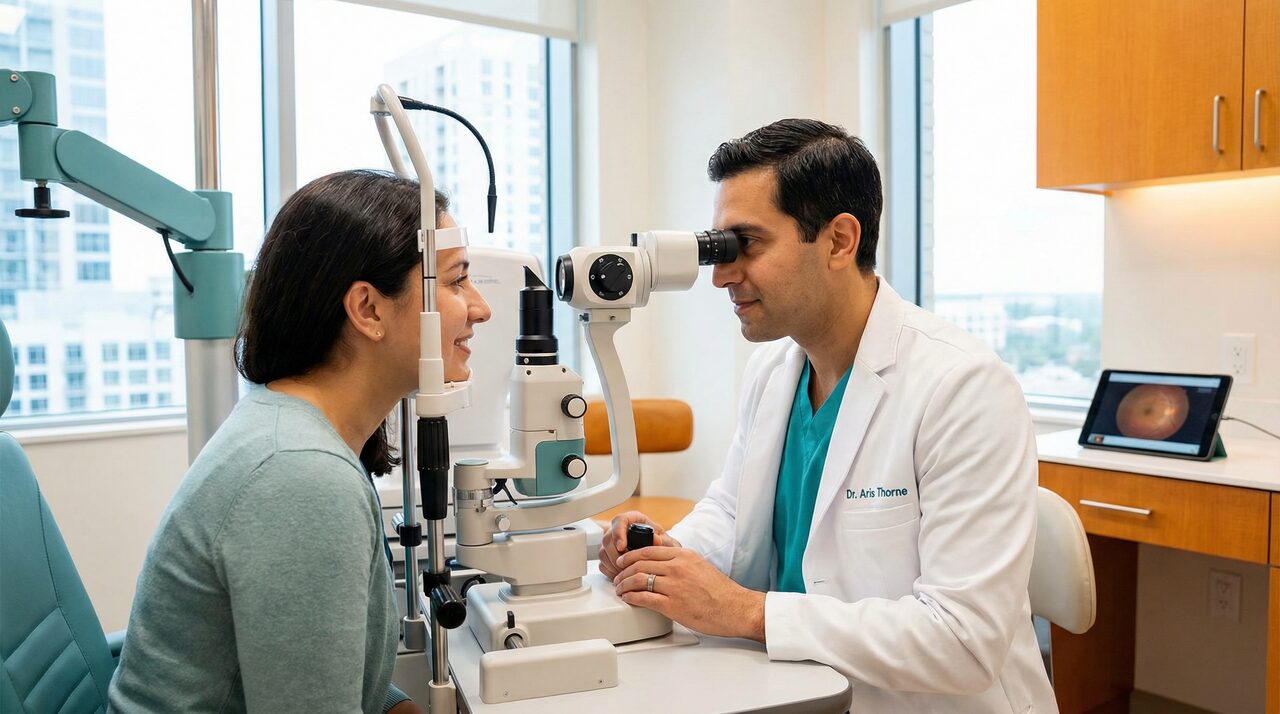
What happens at the appointment?
- Vision test on the letter chart.
- Dilating drops, so bring sunglasses and don’t drive home.
- Examination of the retina with a microscope and lenses.
- OCT scan. A quick, painless scan that shows swelling in the layers of the retina.
- Sometimes a dye test (fluorescein angiography). Dye is injected into an arm vein and photos show which vessels are leaking or blocked.
Then a plan: watch and repeat, or treat with injections or laser.
What should I bring?
- Your latest HbA1c and blood pressure readings. UK guidance says ophthalmologists should have these and discuss them with you.
- A list of your medicines.
- Your glasses.
- Someone to get you home.
- Questions. What stage am I at? What’s the plan? What should make me call sooner?
Do I go back to screening afterwards?
Often, yes. While you’re under the hospital eye clinic, you usually don’t need separate screening photos. Once things are stable, you’re discharged back to screening. For treated macular oedema, UK guidance suggests about 12 months of hospital monitoring first.
Check you’re back on the screening list after discharge. This handover is where people fall through the gaps.
The bottom line
Screening for no or mild retinopathy. A specialist for macular oedema, moderate or worse retinopathy, or new vessels. And urgent care for anything sudden. Keep every appointment, even when your vision seems fine.
More: why you need a regular dilated eye exam and our diabetes complications guide.
Sources
- American Diabetes Association. Standards of Care in Diabetes 2026, section 12: Retinopathy, neuropathy, and foot care.
- National Institute for Health and Care Excellence. Diabetic retinopathy: management and monitoring (NG242).
- NHS. Diabetic retinopathy.
General public information, not personalised treatment advice. Children, pregnancy and complex health conditions need individual specialist advice. Don’t start, stop or change a medicine without speaking to your own healthcare team.