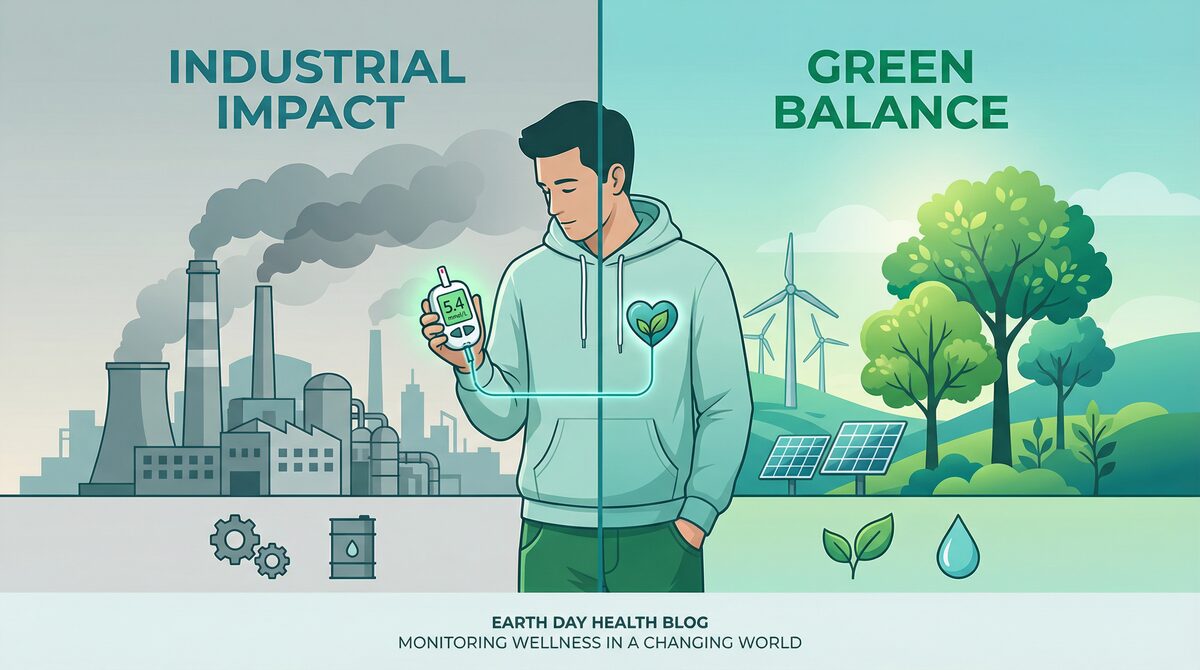
Diabetes is personal, but it is not managed in a vacuum. Weather, air quality, food access, safe places to walk, insurance, work schedules, and supply storage all shape daily care.
Quick summary
CDC highlights heat risks for people with diabetes, and EPA notes that people with diabetes are among groups at higher risk from particle pollution. Environmental risk is not about blame. It is about planning and access.
Key takeaways
- Heat can increase dehydration risk and affect medicines, devices, and glucose patterns.
- Air pollution is a cardiovascular concern, and people with diabetes are considered a higher-risk group in EPA particle pollution materials.
- Food access, safe activity spaces, work conditions, and supply storage can affect diabetes routines.
- Planning should be practical: water, cool storage, air-quality checks, backup supplies, and clinician guidance.
Heat and dehydration
CDC explains that people with diabetes can dehydrate more quickly in heat, and that high blood sugar can increase urination and dehydration. Heat can also affect insulin, oral medicines, pumps, meters, and test strips. A hot day plan may include water, shade, indoor activity options, more frequent glucose checks, and protected storage for supplies.
Air quality and heart risk
EPA materials on particle pollution identify people with diabetes among sensitive groups. Air pollution can worsen cardiovascular risk, and diabetes already raises the importance of heart, kidney, blood pressure, and cholesterol care. On poor air quality days, people with heart or lung disease, older adults, and people with diabetes may need to reduce strenuous outdoor activity and follow local Air Quality Index advice.
Food and neighborhood realities
It is easier to give diabetes advice than to live it. Fresh food, medication access, refrigeration, transportation, safe walking space, time off work, and insurance coverage all matter. If a plan ignores these realities, it may be technically correct but unusable. A better care plan asks what is actually available and builds from there.
Prepare for disruptions
Weather events, power outages, travel, smoke, and heat waves can interrupt diabetes care. Keep a small emergency supply list, know how medicines should be stored, carry glucose treatment, and ask the care team how long insulin or other medicines can safely be outside recommended temperatures. People using insulin, pumps, CGMs, or dialysis need especially clear backup plans.
What to ask your care team
- How should I adjust activity and glucose checks during heat or poor air quality?
- How should I store insulin, devices, and test strips during power outages or travel?
- Can my care plan be adapted to my food access, work schedule, budget, and neighborhood?
- What emergency supplies should I keep ready for weather or access disruptions?
Practical takeaway
Environmental diabetes care means matching medical advice to real-world heat, air quality, food access, supply storage, and safety constraints.
Safety note
Seek urgent care for heat stroke symptoms, chest pain, severe shortness of breath, confusion, severe dehydration, ketones, fainting, or glucose that stays dangerously high or low despite your care plan. This information is general education and is not a substitute for medical care.
Source summary
- CDC: Managing diabetes in the heat. Guidance on heat, dehydration, glucose checks, and diabetes supply storage. Source
- EPA: Particle pollution exposure. Identifies sensitive groups for particle pollution, including people with diabetes. Source
- EPA: Particle pollution questions. Explains exposure reduction and cardiovascular-risk groups. Source
- AHA: Air pollution, heart disease, and stroke. Explains cardiovascular links and practical pollution-risk context. Source