Quick summary: Snacks are not required for everyone with diabetes, but when you do snack, the right choice can support steadier glucose and heart health.
What makes a snack heart-friendly
Diabetes raises the risk of cardiovascular disease, so snack quality matters. Heart-friendly snacks tend to be lower in added sugar, lower in sodium, and lower in saturated fat. They often include fiber, protein, and unsaturated fats.
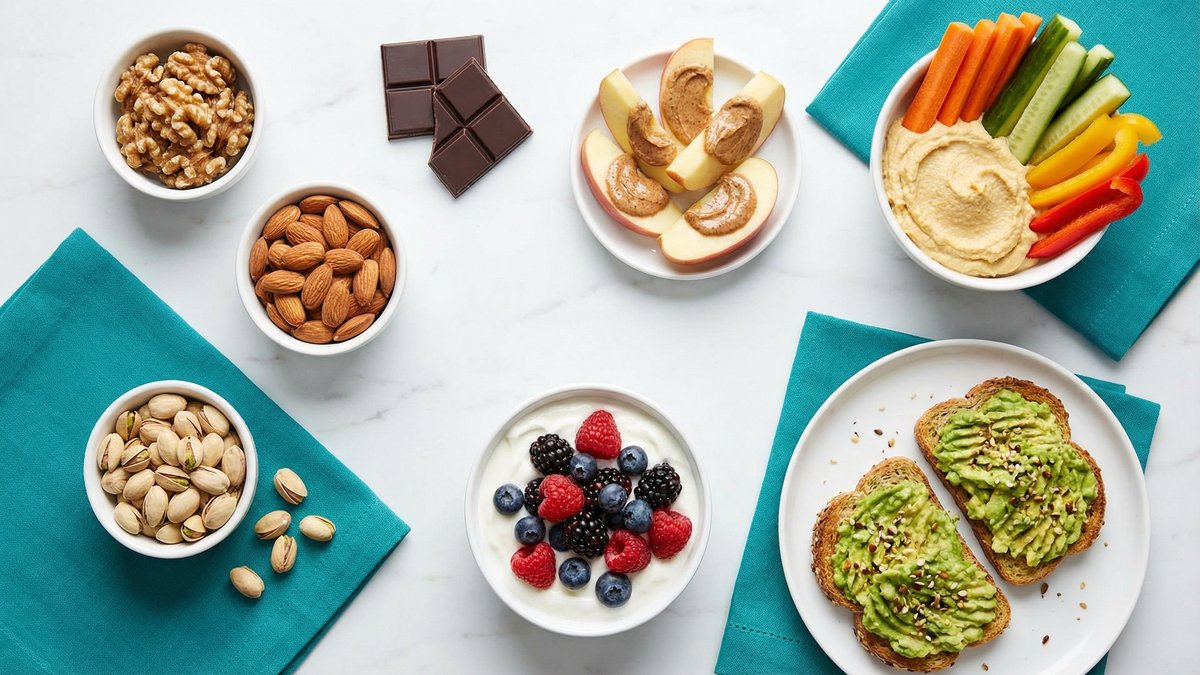
Good examples include vegetables with hummus, plain yogurt with berries, a small handful of nuts, apple slices with peanut butter, boiled eggs, roasted chickpeas, or whole-grain crackers with tuna or avocado.
Think about the reason for the snack
A snack for hunger may need protein and fiber. A snack before activity may need carbohydrate. A snack to prevent or treat low blood sugar is different and should follow the plan from your diabetes team.
People using medicines that can cause low blood sugar should know their low-glucose treatment plan. Heart-healthy snacks are not a substitute for fast-acting carbohydrate when true hypoglycemia needs treatment.
Portion matters
Even nutritious snacks can add extra calories or carbohydrate when portions are large. Nuts, nut butters, dried fruit, and granola can be healthy in small amounts but easy to overeat.
Pairing foods can help. A carbohydrate food plus protein or fat, such as fruit with yogurt or crackers with cheese, may feel more satisfying than carbohydrate alone.
Practical takeaway
Keep two or three go-to snacks available so the easiest choice is also a helpful one. Choose options that fit your glucose pattern, heart-health goals, and appetite.
Safety note: This article is for general education. It cannot replace advice from your own diabetes or medical team.