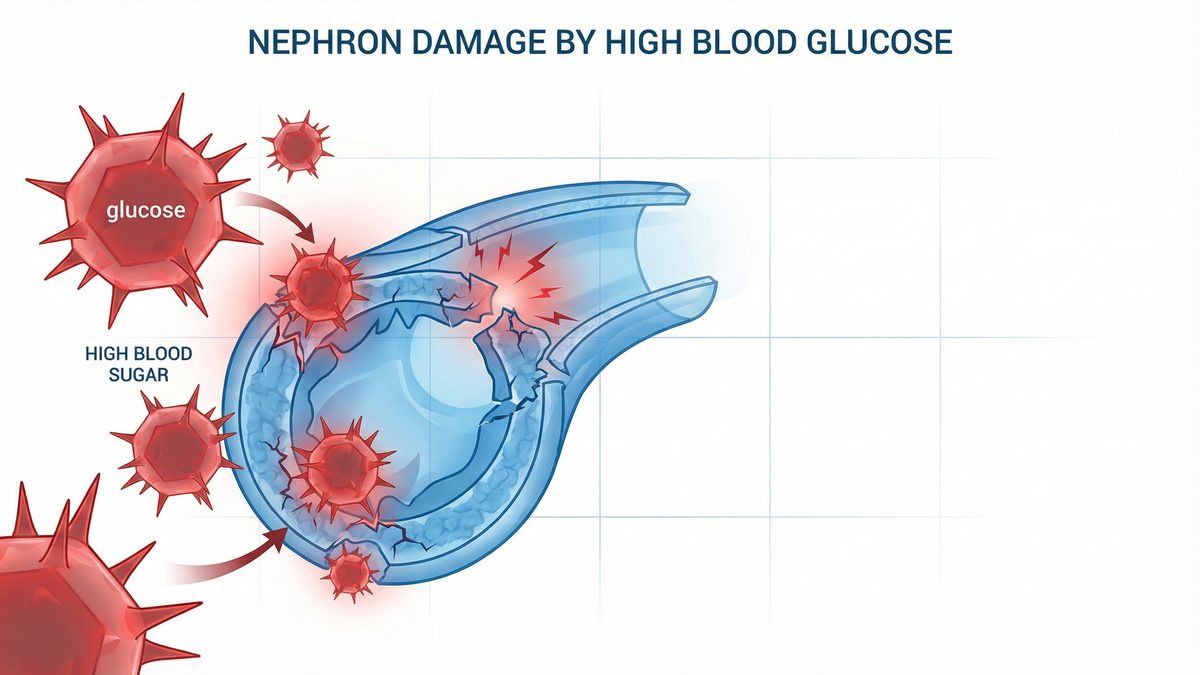
High blood sugar can damage kidney filters over time, especially when combined with high blood pressure, smoking, cholesterol problems, or family risk. The damage may begin quietly, long before symptoms appear.
Quick summary
Kidney protection is not about perfect glucose every day. It is about reducing long-term exposure to risk and checking for early warning signs.
Key takeaways
- High glucose can injure small kidney blood vessels.
- UACR may rise before kidney symptoms appear.
- eGFR shows filtering capacity but can look normal early on.
- Blood pressure and kidney-protective medicines often matter as much as glucose.
What happens inside the kidney
The kidneys filter blood through tiny units called glomeruli. High glucose can contribute to inflammation, scarring, and pressure changes inside those filters. Over time, albumin may leak into urine and filtering ability may decline.
The process is usually slow, which creates a window for prevention. That is why regular testing matters even when a person feels well.
What reduces risk
- Know your A1c and glucose pattern goals.
- Check UACR and eGFR on schedule.
- Treat blood pressure consistently.
- Ask whether kidney-protective diabetes or blood pressure medicines fit your situation.
- Avoid smoking and review NSAID use if kidney risk is present.
Practical takeaway
High blood sugar is one kidney risk factor, not the only one. The strongest prevention plan usually combines glucose, blood pressure, medicine, and screening work.
Safety note
This article is not a substitute for medical care. Seek urgent care for severe dehydration, vomiting, confusion, chest pain, severe shortness of breath, or very high blood sugar with ketones or severe illness.
What to ask your care team
- What do my latest kidney numbers mean for my diabetes plan?
- Which symptoms, medicine changes, or test results should prompt urgent care?
- Do my blood pressure, glucose, nutrition, or medicine goals need adjustment?
Related reading
Source summary
- Diabetic Kidney Disease, National Institute of Diabetes and Digestive and Kidney Diseases. Patient guidance. Accessed June 5, 2026. Source
- Albuminuria, National Kidney Foundation. Patient guidance. Accessed June 5, 2026. Source
- Estimated Glomerular Filtration Rate, National Kidney Foundation. Patient guidance. Accessed June 5, 2026. Source
- Diabetic Kidney Problems, MedlinePlus, National Library of Medicine. Patient guidance. Accessed June 5, 2026. Source