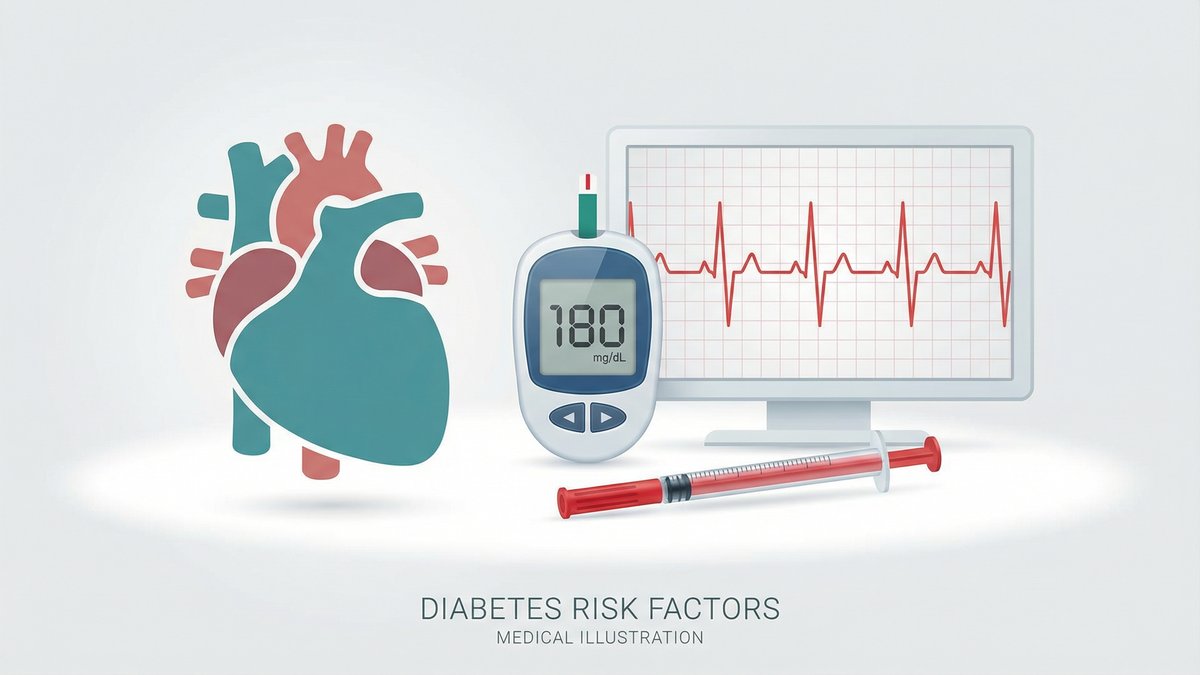
Could inflammation help explain why some people with type 2 diabetes develop heart failure? A new analysis from the long-running Look AHEAD study found that higher levels of one inflammatory marker, interleukin-6 (IL-6), were associated with a greater risk of developing heart failure. A structured lifestyle program also reduced IL-6 more than diabetes education alone after one year.
These findings are important, but they need careful interpretation. The study does not show that IL-6 causes heart failure, that lowering IL-6 prevents it, or that people with diabetes should request routine IL-6 testing. It adds to research on inflammation as one part of cardiovascular risk, alongside established factors such as blood pressure, cholesterol, kidney health, smoking, body weight and glucose management.
What did the new Look AHEAD analysis study?
Look AHEAD, short for Action for Health in Diabetes, originally randomized more than 5,000 adults with type 2 diabetes and overweight or obesity to an intensive lifestyle intervention or diabetes support and education. The intervention focused on weight loss through changes in food intake, physical activity and ongoing behavioral support.
For this new ancillary analysis, researchers studied stored baseline measurements of two inflammatory biomarkers. High-sensitivity C-reactive protein (hs-CRP) was available for 1,902 participants, and IL-6 was available for 1,507. They examined whether either marker was associated with later atherosclerotic cardiovascular disease or incident heart failure. They also compared the change in IL-6 after one year between the original randomized treatment groups.
The report was published online in JACC: Heart Failure on 3 September 2026. Read the original study.
The main findings
| Question | Finding | What it means |
|---|---|---|
| Was baseline IL-6 associated with heart failure? | Yes. Each one-standard-deviation increase in log-transformed IL-6 was associated with a 43% higher relative risk of incident heart failure after adjustment. | IL-6 identified a higher-risk group, but association does not prove causation. |
| Was the association different in people without known cardiovascular disease? | It was stronger in participants without a prior cardiovascular disease history: a 92% higher relative risk per one-standard-deviation increase. | The result may help shape future risk research, but it is not a clinical testing threshold. |
| Was hs-CRP associated with the outcomes? | No statistically significant association with atherosclerotic events or incident heart failure was found after adjustment. | Inflammatory markers are not interchangeable, and a negative result matters. |
| Did the lifestyle intervention change IL-6? | At one year, IL-6 fell by 28.7% in the intensive lifestyle group and by 11.8% in the education group. | The randomized intervention affected the biomarker, but the analysis did not prove that this change prevented heart failure. |
The association models accounted for demographics, cardiovascular risk factors and statin use. Even with statistical adjustment, unmeasured differences can remain. IL-6 may be a marker of other biological processes rather than the direct reason that heart failure develops.
Why inflammation and heart failure matter in diabetes
Heart failure means the heart cannot pump blood as effectively as the body needs. Type 2 diabetes and obesity are established risk factors. The connection is not explained by glucose alone: high blood pressure, coronary artery disease, kidney disease, abnormal lipids and changes in heart structure and metabolism can all contribute.
Low-grade inflammation is another possible part of this network. IL-6 is a signaling protein involved in immune and inflammatory responses. A higher blood level can occur for many reasons and does not diagnose heart failure. It is also different from a test such as BNP or NT-proBNP, which clinicians may use when evaluating suspected heart failure.
The 2026 cardiovascular-kidney-metabolic guideline recognizes inflammation as one contributor to cardiovascular risk while emphasizing comprehensive management. That means addressing the factors that already have evidence-based screening and treatment pathways, rather than focusing on a single experimental biomarker. See the AHA/ACC/ADA/ASN cardiovascular-kidney-metabolic guideline. Our overview of the first CKM guideline explains the broader approach.
The important difference between a risk marker and a treatment target
A risk marker can be associated with an outcome without being useful as a routine test. Before IL-6 testing could guide everyday diabetes care, researchers would need to establish questions such as:
- Does measuring IL-6 improve prediction beyond standard clinical information?
- Is there a validated threshold that changes what clinicians should do?
- Would treatment decisions based on the result improve patient outcomes?
- Can an intervention that specifically lowers IL-6 safely reduce heart-failure events?
This analysis did not answer those questions. It should not prompt people to buy direct-to-consumer inflammation tests, take supplements marketed as anti-inflammatory or ask for medicines that block inflammatory pathways. None of those actions was tested here.
What the lifestyle result does and does not show
The greater fall in IL-6 with intensive lifestyle support is credible because participants had originally been randomized. However, IL-6 was an intermediate biomarker, not a clinical outcome. The original Look AHEAD trial did not significantly reduce its primary composite cardiovascular outcome after a median follow-up of 9.6 years, although it improved weight, fitness, glucose control and several other health measures.
That history prevents a simplistic conclusion that lowering IL-6 through weight loss will prevent heart failure. It also does not make lifestyle support unimportant. Food quality, activity, sleep, smoking cessation and weight management can support health in many ways, but goals should be individualized and free from blame. The intensity of the Look AHEAD program was much greater than a brief instruction to lose weight.
What should people with type 2 diabetes do now?
The study does not change treatment by itself. A practical heart-health review can focus on established priorities:
- Review blood pressure, cholesterol, glucose and kidney function with your healthcare team.
- Ask whether your current diabetes medicines are appropriate for your heart and kidney risk, rather than changing treatment independently.
- Discuss food, activity and weight goals that are safe, realistic and supported.
- Avoid smoking and ask for help to stop if needed.
- Keep scheduled reviews even when you feel well, because early heart failure may cause few or nonspecific symptoms.
Modern diabetes medicines can have benefits beyond glucose lowering for selected people. Our guide to heart health and type 2 diabetes medicines provides a patient-friendly overview. Individual suitability still depends on diagnoses, kidney function, side effects, cost and personal priorities.
Heart-failure symptoms should not be ignored
Possible symptoms include new or worsening shortness of breath, unusual fatigue, swelling in the feet, ankles, legs or abdomen, difficulty breathing when lying flat, and sudden weight gain from fluid retention. These symptoms have many possible causes, but they deserve clinical assessment. Seek urgent medical help for severe breathlessness, chest pain, fainting or symptoms that feel dangerous. The American Heart Association explains heart-failure warning signs.
Questions to ask at an appointment
- What are my most important heart-failure risk factors?
- Are my blood pressure, cholesterol and kidney checks up to date?
- Do my symptoms need an examination, ECG, blood test or heart scan?
- Would any change to my diabetes treatment improve heart or kidney protection?
- What lifestyle support is available and realistic for me?
Frequently asked questions
Should I ask for an IL-6 blood test?
Not on the basis of this study. The analysis did not establish a clinical threshold or show that routine IL-6 testing improves care. A clinician can assess heart-failure risk and symptoms using validated clinical information and tests.
Does a high IL-6 level mean I have heart failure?
No. IL-6 is a nonspecific inflammatory marker. Heart failure requires a clinical assessment and usually other investigations. Do not interpret one biomarker result as a diagnosis.
Did the lifestyle program prevent heart failure?
This analysis showed a greater reduction in IL-6 after one year, not proof that the reduction prevented heart failure. The biomarker result is useful for research but should not be substituted for a clinical outcome.
The bottom line
The new Look AHEAD analysis strengthens the case for studying inflammation as part of heart-failure risk in type 2 diabetes. It does not make IL-6 a routine test or prove that targeting it will prevent disease. For patients today, the most useful response remains comprehensive, individualized heart and kidney risk care, supported lifestyle changes and prompt assessment of possible heart-failure symptoms.
This article provides general medical education and does not replace diagnosis or treatment from your healthcare team.
Sources
- Patel KV, Chiu L, Garcia KR, et al. Residual Inflammatory Risk of Heart Failure and Atherosclerotic CVD in Diabetes: Look AHEAD Ancillary Study. JACC: Heart Failure. Published online 3 September 2026. doi:10.1016/j.jchf.2026.103296.
- Ndumele CE, et al. 2026 AHA/ACC/ADA/ASN Guideline for the Prevention, Detection, Evaluation, and Management of Cardiovascular-Kidney-Metabolic Syndrome. Circulation. 2026.
- American Diabetes Association and American Heart Association. Update on Prevention of Cardiovascular Disease in Adults With Type 2 Diabetes Mellitus in Light of Recent Evidence. Diabetes Care. 2015;38:1777-1803.
- American Heart Association. Heart Failure Signs and Symptoms. Reviewed 29 May 2025.