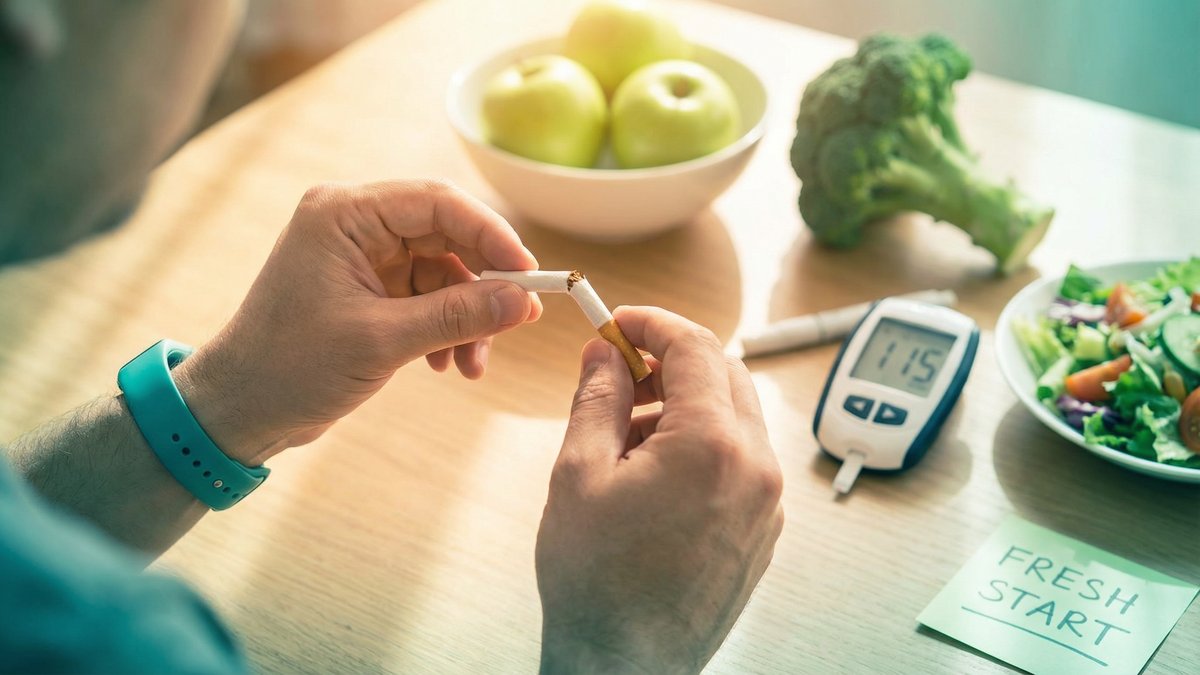
Quitting smoking is one of the highest-impact health steps a person with diabetes can take. It is also hard, and needing help is normal.
Quick summary
Smoking can worsen diabetes-related risks, including heart disease, stroke, kidney disease, eye disease, nerve damage, and foot problems. Nicotine can raise blood sugar, and smoking can make insulin resistance worse. A quit plan works better when it includes practical support.
Key takeaways
- Smoking adds risk on top of diabetes-related heart and blood-vessel risks.
- Quitting may take more than one attempt, and medicines or counseling can help.
- Tell your clinician if you smoke, vape, or use nicotine products so support can be matched to your needs.
- If diabetes medicines change while quitting, glucose patterns may need closer review.
Why smoking matters with diabetes
CDC explains that smoking can worsen diabetes and increase complications. Blood vessels, nerves, kidneys, eyes, heart, and feet are already key areas of diabetes care. Smoking adds pressure to the same systems.
Nicotine and glucose
Nicotine can raise blood sugar and may worsen insulin resistance. Some people notice appetite, stress, sleep, or glucose pattern changes while quitting. That does not mean quitting is bad. It means support and monitoring can help.
Build a quit plan
A quit plan can include a quit date, trigger planning, counseling, nicotine replacement, prescription medicines when appropriate, text or phone support, and follow-up. Ask which options fit your medical history and medicines.
Make it diabetes-specific
Ask how quitting may affect glucose checks, food cravings, stress, activity, and medicines. If you have heart disease, kidney disease, eye disease, neuropathy, pregnancy, or depression, mention this when planning support. If you use insulin or medicines that can cause low blood sugar, ask whether changes in eating, activity, or appetite during quitting should change how closely you monitor glucose.
A slip does not mean the plan failed. It means the plan needs adjustment. Bring up cravings, withdrawal, sleep, mood, and barriers honestly so the next quit attempt has more support.
What to ask your care team
- Which quit-smoking options are safe with my diabetes medicines and health history?
- Should I monitor glucose more often while quitting?
- Could nicotine replacement or prescription medicine help me?
- What support can I use if cravings, stress, or mood symptoms are strong?
Practical takeaway
Treat quitting as diabetes care, not a side project. Ask for counseling, medicine options, glucose-monitoring advice, and follow-up.
Safety note
Seek urgent care for chest pain, severe shortness of breath, stroke-like symptoms, severe depression, thoughts of self-harm, or glucose readings that remain dangerously high or low despite your plan. This information is general education and is not a substitute for medical care.
Source summary
- CDC: Diabetes and smoking. Explains how smoking affects diabetes and complications. Source
- NIDDK: Diabetes overview. Notes that smoking can worsen diabetes problems. Source
- CDC: Stop diabetes complications. Discusses shared risk factors for diabetes complications and smoking. Source
- ADA: Substance use and diabetes. Patient-facing information on smoking and diabetes support. Source