
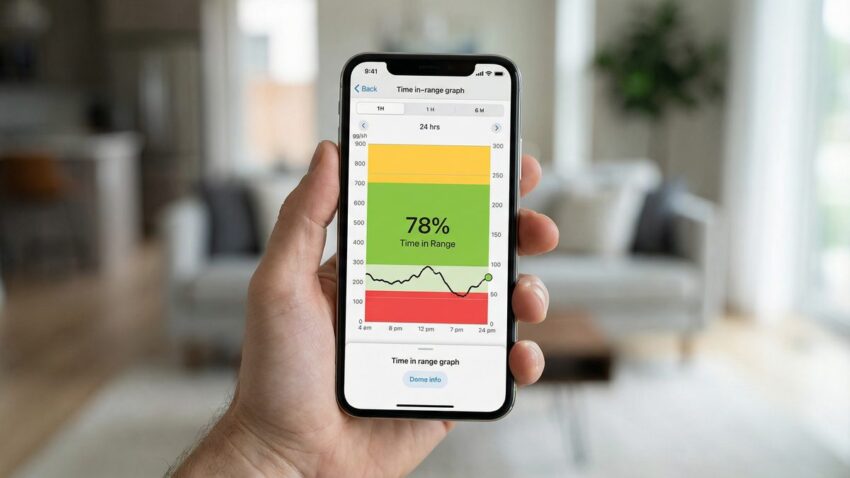
Time in Range — the percentage of time your glucose levels spend within a target range — is rapidly becoming the most important metric in modern diabetes management. Unlike HbA1c, it captures the quality of glucose control, not just the average, and provides actionable daily feedback.
What Is Time in Range?
Time in Range (TIR) measures the percentage of time CGM readings fall within a target range. The standard target range for most people with diabetes is 3.9–10.0 mmol/L (70–180 mg/dL).
| Population | TIR Target | Time Below Range |
|---|---|---|
| Type 1 and Type 2 diabetes | >70% (>16.8 hours/day) | <4% |
| Older adults / high-risk | >50% | <1% |
Why TIR Matters More Than HbA1c Alone
HbA1c provides an average that can mask dangerous glucose variability. Two people with an identical HbA1c of 7.0% may have very different glucose profiles. TIR distinguishes between these scenarios and is therefore a more complete measure of glycaemic quality. Research shows each 10% increase in TIR corresponds to a clinically meaningful reduction in complication risk.
✅ Key Takeaway
Time in Range is a more nuanced and actionable measure of glucose control than HbA1c alone. Aiming for more than 70% TIR, while keeping time below range under 4%, provides a clear and evidence-based target for daily management.
 English
  Urdu
Urdu