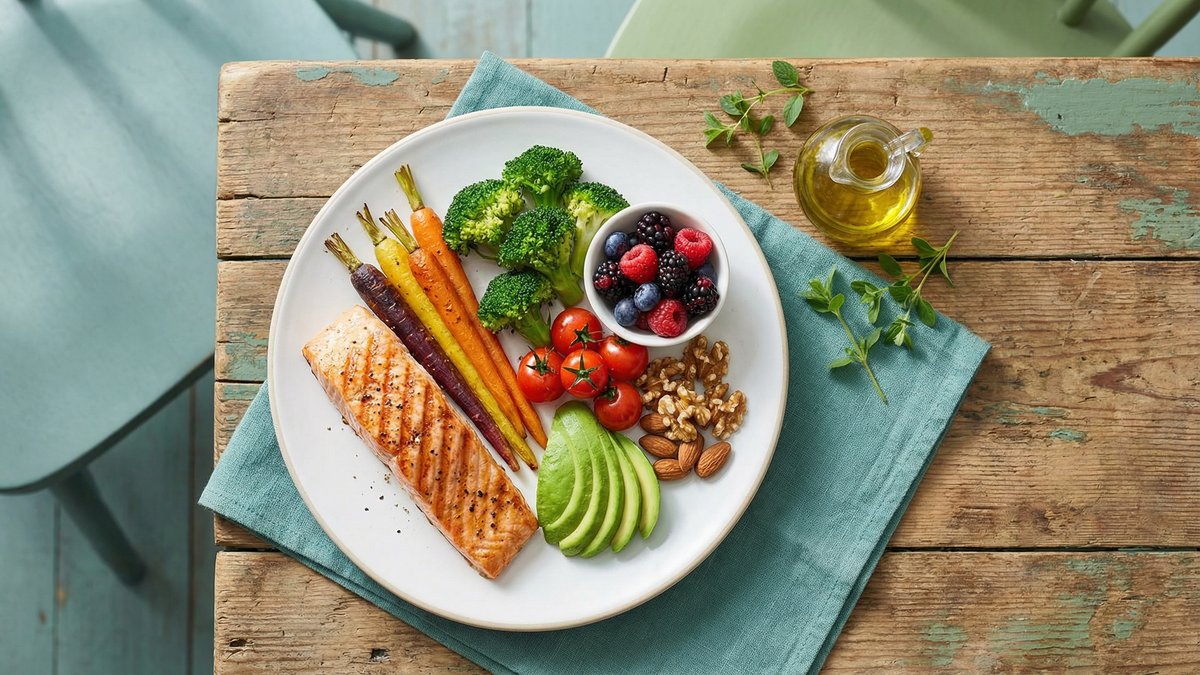
Heart-healthy eating with diabetes is not a single diet. It is a pattern that supports glucose, blood pressure, cholesterol, kidney health, and everyday life.
Quick summary
CDC and NIDDK both describe balanced meal planning, carb awareness, fewer added sugars, fewer refined grains, and attention to sodium and saturated fat. The plate method is a useful starting point because it is visual and adaptable.
Key takeaways
- The plate method can help balance vegetables, protein, and carb foods.
- Carb quality and portion both matter for glucose.
- Sodium and saturated fat matter for blood pressure and cholesterol.
- Kidney disease can change nutrition targets, so kidney-specific advice may be needed.
Start with the plate
CDC suggests filling half a 9-inch plate with nonstarchy vegetables, one quarter with lean protein, and one quarter with carb foods, then choosing water or a low-calorie drink. This is not the only method, but it can make meals easier to build without weighing every ingredient.
Choose carbs with context
Whole grains, beans, fruit, milk, yogurt, and starchy vegetables can fit, but portions matter. CDC notes that carbs raise blood sugar and that pairing carbs with protein, fat, or fiber can slow the rise. Glucose checks can help show which meals work for you.
Protect blood pressure and cholesterol
Heart health also means watching sodium, saturated fat, and ultra-processed foods. AHA recommends limiting sodium and choosing healthier protein sources, including plant sources, fish, seafood, lean poultry, and lower-fat dairy when appropriate. Small swaps repeated often matter more than a perfect single meal.
Make it livable
A practical plan respects culture, budget, cooking time, appetite, medicines, and access to food. Ask for help if the plan feels too strict or confusing. Diabetes self-management education, a registered dietitian, or a kidney dietitian can make the plan safer and more realistic.
What to ask your care team
- Which meal-planning method is best for me: plate method, carb counting, or something more detailed?
- What LDL, blood pressure, kidney, and glucose goals should guide my food choices?
- Do I need to limit sodium, saturated fat, potassium, phosphorus, or protein?
- How should meals change when medicines or activity levels change?
Practical takeaway
Heart-healthy eating with diabetes works best as a repeatable pattern: vegetables, planned carbs, healthy proteins, less sodium, and realistic support.
Safety note
Seek urgent care for severe low glucose, ketones, vomiting, chest pain, stroke symptoms, severe shortness of breath, or glucose that stays dangerously high or low despite your plan. This information is general education and is not a substitute for medical care.
Source summary
- CDC: Diabetes meal planning. Explains the plate method, carb counting, portions, and individualized meal planning. Source
- NIDDK: Healthy living with diabetes. Patient guidance on meals, snacks, carbs, activity, sleep, and individualized care. Source
- CDC: Choosing healthy carbs. Explains portioning carbohydrate foods and pairing carbs with protein, fat, or fiber. Source
- CDC: Diabetes and kidney disease food. Explains why kidney disease may change sodium, potassium, phosphorus, protein, and fluid needs. Source
- AHA: Picking healthy proteins. AHA guidance on healthier proteins and heart-healthy eating patterns. Source