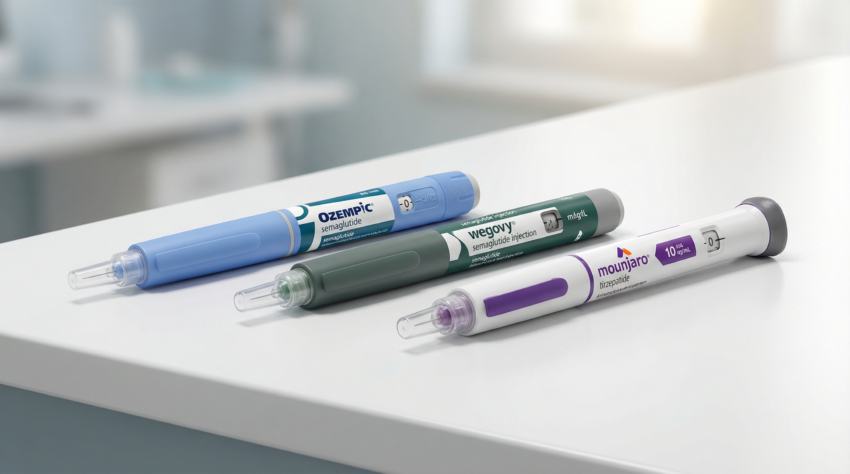
Three medications dominate conversations about diabetes and weight management. Ozempic, Wegovy, and Mounjaro sound similar in some ways and very different in others. Understanding their distinctions helps you have informed discussions with your doctor about which might suit your situation.
ℹ️ At a Glance — Quick Comparison
| Feature | Ozempic | Wegovy | Mounjaro |
|---|---|---|---|
| Active Ingredient | Semaglutide | Semaglutide | Tirzepatide |
| Approved Use | Type 2 Diabetes | Weight Management | Type 2 Diabetes |
| Hormone Target | GLP-1 | GLP-1 | GLP-1 + GIP |
| Max Dose | 2mg weekly | 2.4mg weekly | 15mg weekly |
| Avg. A1C Reduction | 1.4–1.8% | N/A (weight focus) | 2.0%+ |
| Avg. Weight Loss | 4–6 kg | 12–15 kg | 11–13 kg (diabetes); up to 25% body weight (weight mgmt) |
The Active Ingredients
Ozempic and Wegovy contain the same active drug: semaglutide. They are made by the same company, Novo Nordisk. The difference lies in their approved uses and dosing. Ozempic is approved specifically for type 2 diabetes. Wegovy is approved for weight management in people with obesity or overweight with related health conditions.
Mounjaro contains tirzepatide, a different medication made by Eli Lilly. It was initially approved for type 2 diabetes. A higher-dose version called Zepbound received approval for weight management. For this comparison, we focus on Mounjaro as the diabetes treatment.
How They Work
Semaglutide mimics a hormone called GLP-1 (glucagon-like peptide-1). This hormone is released by your gut after eating. It signals your pancreas to produce insulin, slows stomach emptying, and communicates with your brain to reduce appetite. The medication amplifies these natural effects.
Tirzepatide works on two hormones: GLP-1 and GIP (glucose-dependent insulinotropic polypeptide). This dual action may explain why clinical trials show somewhat greater effects on both blood sugar and weight compared to semaglutide alone. The two hormones work through complementary pathways.
Dosing Differences
Ozempic starts at 0.25mg weekly for four weeks, then increases to 0.5mg. The maximum dose is 2mg weekly, though most people stay at 1mg. Wegovy follows a different schedule, starting at 0.25mg and gradually increasing to a maximum of 2.4mg weekly over about four months.
Mounjaro begins at 2.5mg weekly for four weeks. Doses increase in 2.5mg increments up to a maximum of 15mg. The higher ceiling allows for greater dose adjustments based on individual response and tolerability.
All three are injected once weekly using pre-filled pens. The injection technique is similar across products. Most people inject into their abdomen, thigh, or upper arm.
Effectiveness for Blood Sugar
Clinical trials provide useful comparisons, though individual results vary. In studies of people with type 2 diabetes, Ozempic at 1mg typically reduced A1C by 1.4 to 1.6 percentage points. At the 2mg dose, reductions averaged around 1.8 percentage points.
Mounjaro showed larger A1C reductions in head-to-head trials against semaglutide. At the 15mg dose, average A1C reductions exceeded 2 percentage points. Many participants achieved A1C levels below 5.7%, which is the threshold for normal glucose tolerance.
Weight Loss Effects
Weight reduction occurs with all three medications, though they differ in magnitude. Ozempic users typically lose 4 to 6kg on average. Wegovy, with its higher maximum dose, produces average losses of 12 to 15kg in clinical trials. Mounjaro appears to produce the largest weight reductions — trial participants lost an average of 11 to 13kg at higher doses when used for diabetes, with weight management studies showing even greater losses averaging 20 to 25% of body weight.
These are averages. Some people lose considerably more, others considerably less. Response varies based on genetics, adherence to lifestyle changes, dose tolerated, and other factors.
Side Effects
⚠️ Common Side Effects (All Three Medications)
- Nausea — affects 20–40% of users, especially during dose increases
- Vomiting, diarrhoea, and constipation — usually improve over weeks to months
- Feeling of fullness or bloating — due to slower stomach emptying
- Altered food preferences — some foods may become less appealing
Rare but serious risks: pancreatitis, gallbladder problems, and potential thyroid tumours (based on animal studies). People with a personal or family history of medullary thyroid cancer should not use these medications.
Cost and Insurance
ℹ️ Cost Reality Check
List prices for all three medications exceed £800 per month without insurance. Coverage often differs based on the reason for prescription — insurance plans frequently cover these medications for diabetes but deny coverage for weight management. This creates situations where the same drug is approved or denied based on the diagnosis code submitted.
Which Should You Choose?
The choice depends on your specific circumstances. If you have type 2 diabetes and want the largest possible impact on blood sugar and weight, Mounjaro may offer advantages based on current evidence. However, individual response varies, and some people do better on semaglutide.
Insurance coverage often determines options in practice. If only one medication is covered, that becomes your starting point. You can always discuss switching if results are inadequate.
Previous medication experiences matter. If you tried Ozempic with good results but wanted more weight loss, Wegovy at higher doses or switching to Mounjaro might help. If side effects were intolerable, a different medication class might be more appropriate than trying another GLP-1.
✅ Key Takeaway
Ozempic and Wegovy contain semaglutide and work on GLP-1. Mounjaro contains tirzepatide and works on both GLP-1 and GIP. All three reduce blood sugar and weight, but Mounjaro shows larger effects in clinical trials. Side effects are similar across products. Your choice will depend on what is available, affordable, and appropriate for your individual health situation — always discuss options with your doctor.
Sources: SURPASS and SUSTAIN clinical trial programmes, FDA and EMA prescribing information, comparative effectiveness studies published in NEJM and Lancet.
 English
  Urdu
Urdu